
Archive for the ‘Exercise’ Category
Home Gymnasium Equipment: Redefining Fitness at Home
So, you’ve decided to turn your living room into a personal sweat palace, huh? Smart move! No more excuses about the weather or that trainer who thinks 90 minutes of burpees is a fun way to spend an afternoon. With the right gear, you can pump iron while watching the latest series on Netflix. Imagine this: you’re deadlifting in PJs and your only audience is the cat who’s judging your life choices. What a time to be alive! In this brave new world of at-home workouts, the right equipment can make all the difference. Think adjustable dumbbells that don’t take up half your living room space—because who needs a coffee table when you could have a bench press? Or a stationary bike that quietly melts away those late-night pizza binges without making you feel like you’re auditioning for a cycling team. With these game-changers at your fingertips, you’ll redefine fitness in the comfort of your home, one sweat-drenched episode at a time!
🏋️♂️ Essential Home Gym Equipment
- Dumbbells: Versatile for strength training, available in various weights.
- Resistance Bands: Ideal for full-body workouts, portable and adjustable.
- Yoga Mat: Essential for floor exercises, stretching, and pilates.
🌟 Advanced Home Gym Equipment
- Treadmill: Perfect for cardio workouts, customizable speed, and incline.
- Stationary Bike: Low-impact cardio, great for endurance training.
- Power Rack:
- Versatility: Allows for squats, bench presses, and pull-ups.
- Safety: Adjustable safety bars for secure lifting.
- Strength Training: Supports heavy lifting and muscle building.
🕑 Setting Up Your Home Gym
- Space: Choose a dedicated area, at least 100 square feet, for your equipment.
- Budget: Plan your investment based on essential and advanced equipment needs.
- Lighting: Ensure proper lighting for a motivating workout environment.
💪 Comparing Home Gym Equipment Brands
| Brand | Equipment | Price Range | Durability | Rating |
|---|---|---|---|---|
| Bowflex | Adjustable Dumbbells, Home Gyms | $300 – $2,000 | High | 4.8/5 |
| NordicTrack | Treadmills, Ellipticals | $800 – $2,500 | High | 4.7/5 |
| Peloton | Stationary Bikes, Treadmills | $1,495 – $2,945 | Very High | 4.9/5 |
| Rogue Fitness | Power Racks, Barbells | $400 – $1,200 | Very High | 4.9/5 |
🍴 Home Gym Workout Ideas
- Strength Circuit: Combine dumbbell squats, resistance band rows, and push-ups.
- Cardio Blast: Mix treadmill sprints with stationary bike intervals.
- Flexibility Routine: Yoga flow on a mat, followed by foam rolling.
🧼 Maintenance and Safety Tips
- Regularly clean equipment with disinfectant wipes.
- Inspect for wear and tear to prevent accidents.
- Ensure proper storage to maximize space and safety.
Dive into Q&A
🏋️♂️ Q1: What’s the biggest benefit of having a home gym? 💪 A1: Convenience! You can work out anytime, saving time on commuting to a gym.
🏋️♂️ Q2: How can I make my small space work for a home gym? 💪 A2: Opt for multi-functional equipment like adjustable dumbbells and resistance bands, which require minimal space.
🏋️♂️ Q3: Can I get a full workout with just basic home gym equipment? 💪 A3: Absolutely! With a few essentials like dumbbells, resistance bands, and a mat, you can target all major muscle groups.
🏋️♂️ Q4: Is it worth investing in high-end equipment for a home gym? 💪 A4: If you’re committed to your fitness routine, high-end equipment can offer durability and better features, making it a worthwhile investment.
🏋️♂️ Q5: What’s a unique workout routine I can try at home? 💪 A5: Try a HIIT session combining bodyweight exercises like burpees, jump squats, and mountain climbers for a full-body burn.
🏋️♂️ Q6: Can I build muscle effectively with home gym equipment? 💪 A6: Yes! With the right equipment like a power rack, barbells, and dumbbells, you can effectively build muscle at home.
🏋️♂️ Q7: How do I ensure my home gym is safe for use? 💪 A7: Regularly inspect equipment for damage, ensure proper setup, and keep your workout space organized and clutter-free.
🏋️♂️ Q8: Can I do cardio in a small home gym? 💪 A8: Absolutely! Consider a compact treadmill or stationary bike, or simply use bodyweight exercises like jumping jacks and burpees.
🏋️♂️ Q9: How do I maintain motivation to work out at home? 💪 A9: Create a dedicated workout space, set goals, and mix up your routine to keep things interesting.
🏋️♂️ Q10: What’s the best way to store my home gym equipment? 💪 A10: Use wall-mounted racks, shelves, and storage bins to keep your space organized and maximize room for workouts.
Elevate Your Workout with Technogym Fitness Equipment
It’s time to strut into the gym like you own the place—and with Technogym, you just might! Picture this: state-of-the-art machines that not only make you feel like a superhero but also leave you wondering why you ever did squats with a rusty old barbell. These beauties combine sleek design with top-notch performance, making each rep feel less like a chore and more like a symphony of sweat and strength. Whether you’re about building muscle, shedding fat, or just flexing on your neighbors, relying on Technogym is like having a personal trainer who tells dad jokes while you lift. So, skip those dusty weights and grab some high-quality gear that actually gets you results—because life’s too short to lift ugly stuff!
🏋️♂️ Benefits of Technogym Fitness Equipment
- Innovation: State-of-the-art technology enhances your workout experience.
- Durability: Built to last with premium materials and craftsmanship.
- Versatility: Suitable for all fitness levels, from beginners to pros.
🌟 Choosing the Right Technogym Equipment
- Types of Equipment: Treadmills, ellipticals, weight machines – each tailored for specific fitness goals!
- Key Features:
- Smart Connectivity: Sync with apps and track your progress.
- Ergonomics: Designed for comfort and efficiency.
- Customizable Programs: Tailor workouts to your needs.
- Design and Aesthetics:
- Modern Look: Sleek designs that complement any space.
- Compact Options: Space-saving models for home gyms.
🕑 Best Times to Use Technogym Equipment
- Morning: Kickstart your day with an energizing workout.
- Evening: Unwind and de-stress after a long day.
- Post-Work: Ideal for fitting in exercise after your workday.
💪 Comparing Technogym Equipment Models
| Model | Type | Key Feature | Price | Rating |
|---|---|---|---|---|
| MyRun | Treadmill | Interactive running sessions | $3,000 | 4.8/5 |
| Skillmill | Functional Trainer | Non-motorized for full-body workouts | $4,500 | 4.7/5 |
| Bike Forma | Exercise Bike | Biomechanical design for natural movement | $2,500 | 4.6/5 |
| Unica | Multi-Gym | 30+ exercises in one machine | $6,500 | 4.5/5 |
🍴 Workout Tips with Technogym Equipment
- Interval Training: Use MyRun for high-intensity interval training (HIIT).
- Strength Circuits: Combine Unica with free weights for a full-body circuit.
- Cardio Sessions: Skillmill is perfect for building endurance and strength simultaneously.
🧼 Maintenance and Safety Tips
- Regularly clean and lubricate moving parts.
- Check for wear and tear to ensure safety.
- Follow the manufacturer’s guidelines for optimal performance.
Dive into Q&A
🏋️♂️ Q1: What’s the biggest advantage of using Technogym equipment? 💪 A1: The seamless integration of technology and ergonomics – it provides a workout that’s both effective and comfortable.
🏋️♂️ Q2: How can I maximize my workouts with Technogym? 💪 A2: Utilize the smart programs and tracking features to tailor your workouts and monitor progress over time.
🏋️♂️ Q3: Can Technogym equipment be used for rehab? 💪 A3: Yes! Many models offer low-impact options ideal for rehabilitation and recovery.
🏋️♂️ Q4: Is Technogym equipment worth the investment? 💪 A4: Absolutely! With its durability, advanced features, and stylish design, it’s a long-term investment in your health.
🏋️♂️ Q5: What’s a unique workout I can do with Technogym? 💪 A5: Try combining Skillmill sprints with strength exercises on the Unica for a challenging full-body workout.
🏋️♂️ Q6: Can Technogym equipment be used by beginners? 💪 A6: Yes! The equipment is user-friendly with customizable settings to match all fitness levels.
🏋️♂️ Q7: How do I ensure my Technogym equipment lasts? 💪 A7: Regular maintenance and following the manufacturer’s care instructions will keep your equipment in top shape for years.
🏋️♂️ Q8: Can I use Technogym equipment in a small space? 💪 A8: Yes, Technogym offers compact models like the Bike Forma, designed for smaller spaces.
🏋️♂️ Q9: Are there financing options for purchasing Technogym equipment? 💪 A9: Many retailers offer financing plans, making it easier to invest in quality fitness equipment.
🏋️♂️ Q10: What’s the best way to integrate Technogym into my existing workout routine? 💪 A10: Use it to complement your current exercises – for instance, add cardio sessions on the Skillmill to your strength training days.
Home Gym Equipment: The Basics for Every Workout Plan
Let’s talk about the unsung heroes of the home gym revolution. You might think the treadmill is the star of the show, but it’s time to give props to the real MVPs—the versatile kettlebell and the trusty resistance bands. Kettlebells? They’re not just for swinging like a pirate on a mission; they add a punch to your strength training, making every workout feel like a full-body fiesta. And resistance bands? Think of them as your workout’s best buddy—easy to stash under the bed and perfect for those sneaky, productive sessions while binge-watching your favorite show! Your home gym arsenal is about to pack a serious punch. So, gear up and get ready to crush those fitness goals right from your living room!
🏋️♂️ Core Equipment for a Home Gym
- Dumbbells: Versatile for strength training across all muscle groups.
- Resistance Bands: Ideal for stretching and muscle toning.
- Yoga Mat: Essential for floor exercises and stability work.
🌟 Advanced Equipment to Elevate Your Workouts
- Cardio Machines: Treadmill, elliptical, or stationary bike for cardio health.
- Strength Training:
- Adjustable Bench: Versatile for various exercises, from bench presses to step-ups.
- Power Rack: For heavy lifting like squats and bench presses with safety.
- Kettlebells: Perfect for dynamic moves and full-body workouts.
- Recovery Tools:
- Foam Roller: Helps relieve muscle tension and improve flexibility.
- Massage Gun: For deep tissue muscle recovery post-workout.
🕑 Best Times to Use Home Gym Equipment
- Morning: Energize your day with a full-body workout.
- Afternoon: Perfect for a mid-day energy boost and stress relief.
- Evening: Wind down with strength or cardio training after a long day.
💪 Comparing Popular Home Gym Equipment Brands
| Brand | Equipment Type | Price Range | Durability | Rating |
|---|---|---|---|---|
| Bowflex | Adjustable Dumbbells, Treadmills | $250 – $1,500 | High | 4.8/5 |
| Rogue Fitness | Power Racks, Barbells | $500 – $2,000 | Very High | 4.9/5 |
| NordicTrack | Ellipticals, Exercise Bikes | $700 – $3,000 | High | 4.7/5 |
| Peloton | Stationary Bikes | $1,500 – $2,500 | High | 4.6/5 |
🍴 Setting Up a Functional Home Gym
- Space Considerations: Choose a dedicated area, ensuring ample room for movement.
- Storage Solutions: Utilize racks, hooks, and shelving to keep equipment organized.
- Comfort and Safety: Invest in good lighting, ventilation, and non-slip flooring.
🧼 Maintenance and Safety Tips
- Regularly clean and disinfect equipment after use.
- Inspect equipment for wear and tear to prevent injuries.
- Ensure proper form and technique during workouts to avoid strain.
Dive into Q&A
🏋️♂️ Q1: What’s the most essential piece of equipment for a home gym? 💪 A1: Dumbbells are the cornerstone – versatile, space-efficient, and suitable for all fitness levels.
🏋️♂️ Q2: How can I maximize space in my home gym? 💪 A2: Opt for multi-functional equipment like adjustable benches and compact cardio machines. Also, vertical storage is key.
🏋️♂️ Q3: Can I achieve a full-body workout with minimal equipment? 💪 A3: Yes! With just dumbbells, resistance bands, and a yoga mat, you can target every muscle group effectively.
🏋️♂️ Q4: What’s the best budget-friendly home gym setup? 💪 A4: Start with resistance bands, a yoga mat, and a set of adjustable dumbbells. Gradually add more equipment as needed.
🏋️♂️ Q5: What’s a unique piece of equipment to add to my home gym? 💪 A5: Consider a battle rope – it’s excellent for cardio and strength training, and adds variety to your workouts.
🏋️♂️ Q6: Can I combine cardio and strength training in my home gym? 💪 A6: Absolutely! Use a combination of bodyweight exercises, dumbbells, and cardio machines like an elliptical or jump rope.
🏋️♂️ Q7: How do I maintain my home gym equipment? 💪 A7: Wipe down after each use, lubricate moving parts regularly, and check for any signs of wear or damage.
🏋️♂️ Q8: What’s the best way to stay motivated with home workouts? 💪 A8: Create a dedicated workout space, set clear goals, and vary your routine to keep things exciting.
🏋️♂️ Q9: Are home gym setups suitable for beginners? 💪 A9: Yes, home gyms can be tailored to any fitness level. Start simple, and progressively add equipment as your fitness improves.
🏋️♂️ Q10: How can I ensure proper form when working out at home? 💪 A10: Use mirrors to check your form, consider online tutorials, or invest in a virtual trainer for guidance.
Transform Your Core: Ultimate Ab Workouts with a Pull-Up Bar
Ready to revamp your workout game? Let’s talk about the humble pull-up bar—a powerhouse tool that turns your home gym into a core-sculpting haven. Imagine this: you’re hanging effortlessly, engaging those abs as if you’re channeling your inner superhero, and every rep feels like a ticket to a carved, rock-solid midsection. Think beyond the basic pull-up! This isn’t just about arm strength—it’s about firing up your core, chiseling definition, and mastering moves that’ll make your workout buddies stop and stare.
So, grab that pull-up bar, flex those abs, and let’s turn your core into the ultimate showstopper. Game on! 🏋️♂️
🌟 Benefits of Ab Workouts with a Pull-Up Bar
- Engages the Entire Core: Beyond crunches, hanging exercises hit your upper, lower, and oblique muscles in one move.
- Improves Functional Strength: Strengthens muscles you use daily for bending, twisting, and stabilizing.
- Adds Variety to Your Routine: Break free from floor exercises and spice things up with gravity-defying moves.
- Increases Grip Strength: Bonus benefit—those hands and forearms get stronger too.
- Accessible and Versatile: Minimal equipment, maximum results.
🔥 Top Core Exercises Using a Pull-Up Bar
- Hanging Leg Raises
- Why it works: Targets your lower abs like a laser.
- How to do it: Hang from the bar with straight arms. Slowly lift your legs until they’re parallel to the ground, then lower.
- Windshield Wipers
- Why it works: Obliterates your obliques.
- How to do it: Hang from the bar, lift your legs to a 90-degree angle, and rotate them side to side like windshield wipers.
- Knee Tucks
- Why it works: Perfect for beginners and builds up to advanced moves.
- How to do it: Hang from the bar, tuck your knees toward your chest, and release.
- Hanging L-Sit
- Why it works: Combines core strength with endurance.
- How to do it: Extend your legs straight out in front of you while hanging, holding the position as long as possible.
- Toes-to-Bar
- Why it works: The ultimate ab crusher for advanced athletes.
- How to do it: Hang from the bar, swing your legs up, and touch your toes to the bar.
🚀 Pro Tips for Effective Pull-Up Bar Workouts
- Start Slow: If you’re new, build strength gradually.
- Use Momentum Wisely: Avoid swinging—control each movement for max effectiveness.
- Engage Your Core: Focus on tightening your abs throughout each exercise.
- Mix It Up: Rotate exercises weekly to keep challenging your muscles.
- Incorporate Rest: Take breaks to prevent burnout and allow recovery.
💡 Why a Pull-Up Bar is a Core Essential
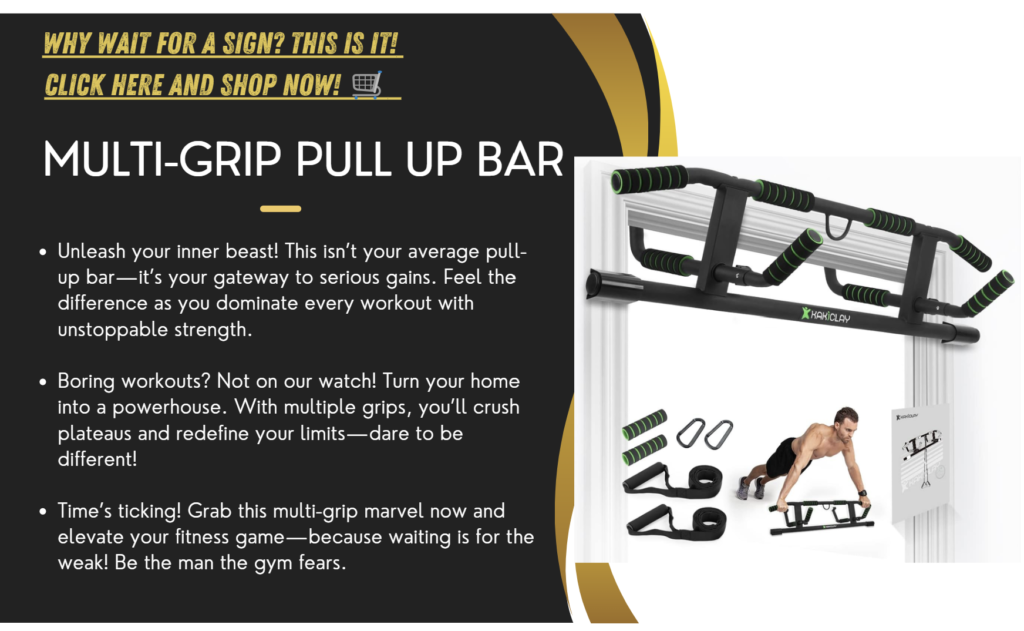
You don’t need a fancy gym or high-tech equipment to get shredded abs. A pull-up bar is compact, affordable, and insanely versatile. Whether you mount it in a doorway or use a freestanding version, this one tool delivers full-body engagement while elevating your core game.
🔍 FAQs: Mastering Pull-Up Bar Core Workouts
Q1: What makes pull-up bar exercises so effective for abs? A1: Hanging exercises recruit stabilizing muscles, forcing your core to work harder compared to floor workouts.
Q2: Do I need a lot of upper-body strength to start? A2: Nope! Start with simple knee tucks or assisted leg raises to build strength over time.
Q3: How often should I do pull-up bar ab exercises? A3: Aim for 2–3 sessions per week, with rest days in between for recovery.
Q4: Can pull-up bar exercises replace traditional ab workouts? A4: They complement them beautifully but don’t ditch floor work entirely—variety is key.
Q5: What if I don’t have a pull-up bar? A5: No worries—try a sturdy alternative, like parallel bars at a park or invest in a budget-friendly doorway bar.
💪 Combine and Conquer: Ultimate Pull-Up Bar Core Routine
- Warm-Up (5 Minutes): Dynamic stretches and light cardio.
- Circuit 1:
- Hanging Leg Raises – 12 reps
- Windshield Wipers – 10 reps per side
- Rest – 60 seconds
- Circuit 2:
- Knee Tucks – 15 reps
- Hanging L-Sit – Hold for 20 seconds
- Rest – 60 seconds
- Circuit 3:
- Toes-to-Bar – 8 reps
- Plank (on the ground) – Hold for 1 minute
- Rest – 60 seconds
Repeat each circuit 2–3 times based on your fitness level.
🎯 Key Takeaways
- A pull-up bar isn’t just for your back and arms—it’s a secret weapon for next-level core workouts.
- Start simple, stay consistent, and progress as your strength builds.
- Get creative with exercises to target all parts of your abs.
It’s time to hang tough, train hard, and transform your core. Let’s get it!
Elevate Your Workouts: Upper Body and Abs Routines That Shine!
Alright, folks, let’s face it: your upper body could use a serious glow-up! You’ve been doing those isolating exercises that leave you feeling about as strong as a wet noodle, and that’s just downright sad. Are your push-ups more like “push-yourselves-into-a-couch” routines? It’s time to stir the pot and get those arms and abs rocking like a summer blockbuster!
The problem? You’re over there wrestling with the same drab workouts that have you yawning louder than a hippo at a spa day. It’s all too familiar: the mirror checks, the lackluster gains, and the embarrassing struggle to lift a grocery bag! Let’s admit it, something’s gotta give, right? Enter the solution: our killer upper body and abs routines, designed to make your muscles pop like popcorn at a movie premiere! Let’s kick those boring workouts to the curb and make your fitness journey not only effective but downright electrifying! Now, roll up your sleeves—we’re about to turn you into a chiseled masterpiece!
🏋️♂️ Why Focus on Upper Body and Abs?
- Core Strength: Essential for stability and balance in all movements.
- Upper Body Power: Enhances functional strength for daily tasks.
- Overall Aesthetics: Defines muscles, creating a sculpted appearance.
🌟 Top Exercises for Upper Body and Abs
- Upper Body:
- Push-Ups: Targets chest, shoulders, and triceps.
- Pull-Ups: Engages back, biceps, and forearms.
- Shoulder Press: Strengthens shoulders and upper chest.
- Abs:
- Planks: Core stabilization for overall strength.
- Russian Twists: Works obliques and core muscles.
- Bicycle Crunches: Targets lower abs and obliques.
🕑 How to Structure Your Routine
- Warm-Up: 5-10 minutes of light cardio to prepare muscles.
- Strength Training: 3-4 sets of each upper body exercise.
- Core Focus: 3 sets of each ab exercise, with minimal rest.
- Cool-Down: Stretching and foam rolling to enhance recovery.
💪 Weekly Workout Schedule
| Day | Focus | Duration | Intensity |
|---|---|---|---|
| Monday | Upper Body Strength | 45 minutes | Moderate |
| Wednesday | Core and Cardio | 40 minutes | High |
| Friday | Upper Body Power | 50 minutes | High |
| Sunday | Abs Focus | 30 minutes | Moderate |
🍴 Nutrition Tips for Muscle Building
- Protein-Rich Diet: Include lean meats, eggs, and plant-based proteins.
- Healthy Fats: Avocados, nuts, and olive oil for sustained energy.
- Complex Carbs: Opt for whole grains, sweet potatoes, and brown rice.
🧼 Safety and Recovery Tips
- Focus on proper form to avoid injury.
- Incorporate rest days to allow muscle recovery.
- Stay hydrated to support overall performance.
Dive into Q&A
🍴 Q1: What’s the best upper body exercise for beginners? 💪 A1: Push-ups are excellent for beginners, building chest, shoulder, and tricep strength without equipment.
🍴 Q2: How can I make my ab workouts more challenging? 💪 A2: Add resistance, like holding a weight plate during Russian twists or using an ab roller for planks.
🍴 Q3: Can I train abs every day? 💪 A3: While abs recover quickly, it’s best to allow at least one day of rest between intense sessions to prevent overtraining.
🍴 Q4: How can I ensure I’m targeting my upper body effectively? 💪 A4: Focus on compound movements like pull-ups and bench presses, and engage multiple muscle groups for balanced development.
🍴 Q5: What’s a good post-workout meal for muscle recovery? 💪 A5: A balanced meal with lean protein, complex carbs, and healthy fats, such as grilled chicken with quinoa and steamed vegetables.
🍴 Q6: How do I prevent muscle soreness after an intense workout? 💪 A6: Cool down properly, stay hydrated, and consider active recovery techniques like light stretching or foam rolling.
🍴 Q7: Can I combine upper body and abs in one workout? 💪 A7: Absolutely! Circuit training that alternates between upper body and core exercises can be highly effective.
🍴 Q8: What’s the most effective way to build upper body strength? 💪 A8: Consistency is key – regular training with progressive overload ensures continuous strength gains.
🍴 Q9: Should I use weights for ab exercises? 💪 A9: Adding weights can increase intensity and build stronger muscles, but start light to avoid strain.
🍴 Q10: How do I stay motivated to stick to my workout routine? 💪 A10: Set clear goals, track progress, and mix up your routines to keep things exciting and challenging.
Transform Your Physique: The Path to Bigger Muscles!
Alright, folks, let’s get real for a second! You’ve been grinding away at the gym, sweating like a sinner in church, but somehow, your muscles are still playing hide and seek—and they’re winning! You feel like you’re pushing weights heavier than your emotional baggage, yet when you glance in the mirror, whoosh, it’s just the same ol’ spaghetti arms staring back at you, gleefully mocking your attempts for a beefier physique.
Now, let me agitate that thought a little further: the average gym-goer goes through the same monotonous routine, stuck in a cycle that’s about as exciting as watching paint dry. You’re tossing in the reps, drowning in protein shakes that taste like regret, and all you’ve got to show for it is a collection of gym selfies that make you want to cry. It’s like shopping for a Tesla and walking away with a tricycle—your dream of bulging biceps feels further away than ever, and the gym mirror reflects every ounce of frustration!
But don’t you dare throw in the towel just yet! Here’s your golden solution: it’s time to shake things up, mold that flab into fab, and unleash your inner Hercules! This guide is about to take you on the epic journey to bigger muscles, equipped with the secrets of insane workouts, savvy nutrition, and a sprinkle of humor to keep your spirits high. Let’s turn that gym frown upside down and carve out the physique you’ve always dreamed of—hey, when life gives you weights, lift ‘em! Let’s get to work!
💪 Strategies for Building Muscle
- Strength Training: Focus on heavy weights and compound movements.
- Progressive Overload: Gradually increase weights to challenge muscles.
- Consistency: Stick to your workout routine for visible results.
🌟 Key Components of a Muscle-Building Plan
- Workout Types:
- Hypertrophy Training: Target muscle growth with moderate weights and higher reps.
- Powerlifting: Build strength with low-rep, high-weight lifts.
- Cross-Training: Combine different exercise styles for overall fitness.
- Nutrition Essentials:
- Protein Intake: Aim for 1.6-2.2 grams per kilogram of body weight daily.
- Carbohydrates: Fuel workouts and recovery with complex carbs.
- Fats: Include healthy fats for hormone production.
- Recovery:
- Sleep: Aim for 7-9 hours per night to aid muscle repair.
- Rest Days: Incorporate active recovery to prevent overtraining.
- Stretching: Enhance flexibility and reduce muscle soreness.
🕑 Effective Workout Routines
- Upper Body: Focus on chest, back, shoulders, and arms – 3-4 times per week.
- Lower Body: Target quads, hamstrings, glutes, and calves – 2-3 times per week.
- Full Body: Incorporate compound exercises to hit all major muscle groups – 2 times per week.
💥 Comparison of Training Methods
| Aspect | Strength Training | Bodybuilding | CrossFit |
|---|---|---|---|
| Focus | Maximal strength | Muscle size and symmetry | Overall fitness and conditioning |
| Reps and Sets | Low reps, high weight | Moderate reps, moderate weight | Varied reps and weights |
| Intensity | High | Moderate to high | High |
| Duration | 60-75 minutes per session | 60-90 minutes per session | 45-60 minutes per session |
| Skill Level | Intermediate to advanced | Beginner to advanced | Intermediate |
| Variety | Focused | Targeted | High variety |
🍽️ Muscle-Building Nutrition Tips
- Meal Timing: Eat protein-rich meals within 30 minutes post-workout.
- Hydration: Stay hydrated to support muscle function and recovery.
- Supplements: Consider whey protein, creatine, and branched-chain amino acids (BCAAs).
🧼 Safety and Injury Prevention
- Warm up before workouts to prepare muscles.
- Use proper form to avoid injuries.
- Listen to your body and rest as needed.
Dive into Q&A
🍴 Q1: What’s the best way to increase muscle size? 💪 A1: Combine progressive overload with a balanced diet rich in protein and adequate rest.
🍴 Q2: How often should I train each muscle group? 💪 A2: Target each muscle group 2-3 times per week for optimal growth.
🍴 Q3: Can I build muscle without weights? 💪 A3: Yes, bodyweight exercises and resistance bands can be effective alternatives.
🍴 Q4: What role does nutrition play in muscle growth? 💪 A4: Nutrition provides the necessary building blocks for muscle repair and growth, making it crucial for success.
🍴 Q5: How important is sleep for muscle recovery? 💪 A5: Sleep is essential for muscle repair and overall recovery, aiming for 7-9 hours nightly.
🍴 Q6: How can I avoid plateaus in my muscle-building journey? 💪 A6: Change up your routine regularly and ensure progressive overload.
🍴 Q7: What’s a good post-workout meal for muscle growth? 💪 A7: A balanced meal with protein, carbs, and healthy fats, such as a chicken and quinoa salad.
🍴 Q8: How do I balance cardio with muscle building? 💪 A8: Incorporate cardio in moderation to maintain cardiovascular health without hindering muscle gains.
🍴 Q9: Can supplements replace meals? 💪 A9: Supplements should complement a balanced diet, not replace whole foods.
🍴 Q10: What’s the best approach to muscle recovery after intense workouts? 💪 A10: Focus on adequate rest, proper nutrition, hydration, and stretching.
Precision Training: Targeted Exercises for Arm Muscle Growth
So, picture this: you’re at the gym, flexing in the mirror like you’re auditioning for a Marvel movie, but those biceps are looking flatter than a pancake left out in the sun. You’ve been doing your usual routine—those curls, those tricep extensions—but somehow, your arms feel more like spaghetti than the muscular masterpieces you envisioned. The problem here? Standard workouts don’t cut it for targeted arm growth; they leave your gains just out of reach, like that last slice of pizza at a party—hard to get and wrongfully denied!
Now, let’s stir the pot a little. You’re putting in the time, sweating, grunting, and you’re still not packing on those arms like you thought you would. It’s a classic case of arm envy, people looking at you like you’re a twig while they’re out there busting out those gym selfies with guns so big they need their own zip code. Your frustration builds as you see all those “quick-fix” workouts advertised by fitness influencers. So many promises, yet your arm game remains puny. It’s a heart-wrenching cycle of hope and despair, like trying to date someone who thinks cilantro is an herb and not a crime against humanity!
But wait—you’re not a lost cause! The solution lies in precision training—targeted exercises that will unlock your arm’s hidden potential and transform those noodle arms into bouncy castle biceps! This isn’t just any run-of-the-mill workout program; this is a carefully crafted plan that focuses specifically on developing your arm muscles like the way Aunt Linda focuses on every detail of her fruitcake recipe: with devotion and some wild enthusiasm. We’re talking strategic movements and clever combos that will give you the edge you need to blast through plateaus and sculpt those arms into the showpieces they were meant to be! Buckle up, because your journey to arm glory is about to take off!
💪 Why Focus on Arm Muscles?
- Strength Building: Essential for lifting and daily tasks.
- Symmetry: Balanced arm development improves aesthetics.
- Confidence Boost: Defined arms enhance your physique.
🌟 Key Arm Muscles to Target
- Biceps: Responsible for flexing the elbow and rotating the forearm.
- Triceps: Crucial for extending the elbow and stabilizing the shoulder.
- Brachialis: Lies beneath the biceps and aids in arm flexion.
- Brachioradialis: Forearm muscle that assists in flexing the arm at the elbow.
🏋️♂️ Top Exercises for Arm Muscle Growth
- Biceps Curls: Focuses on the biceps. Use dumbbells or barbells.
- Triceps Dips: Targets the triceps. Can be performed with bodyweight or added resistance.
- Hammer Curls: Engages the brachialis and brachioradialis.
- Close-Grip Bench Press: Works on both the triceps and the chest.
- Skull Crushers: Isolates the triceps with focused contraction.
🕑 Training Frequency and Volume
- Frequency: Train arms 2-3 times per week for optimal growth.
- Volume: 3-4 sets of 8-12 reps per exercise to stimulate hypertrophy.
- Rest: Allow 48 hours of rest between arm workouts for recovery.
💡 Advanced Techniques for Arm Development
- Drop Sets: Gradually reduce weight while continuing the exercise to muscle failure.
- Supersets: Combine two exercises back-to-back without rest, e.g., biceps curls followed by triceps dips.
- Time Under Tension: Slow down the eccentric phase of the movement to increase muscle stress.
📊 Comparing Arm Training Approaches
| Training Style | Focus | Strength | Hypertrophy | Endurance |
|---|---|---|---|---|
| Heavy Lifting | Strength | High | Moderate | Low |
| Moderate Weight, High Reps | Hypertrophy | Moderate | High | Moderate |
| Light Weight, High Reps | Endurance | Low | Moderate | High |
| Combination | Balanced | Moderate | High | Moderate |
🍽️ Nutrition for Arm Muscle Growth
- Protein: Essential for muscle repair and growth – aim for 1.6-2.2g per kg of body weight.
- Carbohydrates: Fuel your workouts and aid recovery – focus on complex carbs.
- Healthy Fats: Supports hormone production – include sources like avocado, nuts, and olive oil.
🧼 Injury Prevention and Recovery
- Warm Up: Always warm up before lifting to increase blood flow and reduce injury risk.
- Proper Form: Maintain proper form to prevent strain on joints and tendons.
- Stretching: Incorporate stretching post-workout to improve flexibility and aid recovery.
Dive into Q&A
💪 Q1: What’s the most effective exercise for arm muscle growth? 🏋️♂️ A1: Biceps curls and triceps dips are the go-to exercises – they directly target the primary muscles for size and strength.
💪 Q2: How can I avoid plateaus in arm training? 🏋️♂️ A2: Mix up your routine with different exercises, rep ranges, and advanced techniques like supersets or drop sets to keep muscles challenged.
💪 Q3: Can I train arms every day for faster growth? 🏋️♂️ A3: No, it’s essential to allow your muscles to recover. Training every day can lead to overtraining and injury.
💪 Q4: Is it better to train arms with heavy or light weights? 🏋️♂️ A4: Both approaches have benefits. Heavy weights build strength, while lighter weights with higher reps focus on hypertrophy and endurance.
💪 Q5: What’s a unique tip for maximizing arm gains? 🏋️♂️ A5: Focus on mind-muscle connection – really concentrate on the muscle you’re working during each rep for better activation.
💪 Q6: Should I include compound exercises in my arm routine? 🏋️♂️ A6: Yes! Exercises like close-grip bench presses and chin-ups work multiple muscle groups, including the arms, for overall growth.
💪 Q7: How important is diet for arm muscle growth? 🏋️♂️ A7: Crucial! Without proper nutrition, your muscles won’t have the fuel needed to repair and grow after intense workouts.
💪 Q8: Can I do cardio and still grow my arm muscles? 🏋️♂️ A8: Yes, but balance is key. Excessive cardio can burn the calories needed for muscle growth, so prioritize strength training if size is your goal.
💪 Q9: How do I know if I’m overtraining my arms? 🏋️♂️ A9: Signs include persistent soreness, decreased performance, and lack of progress. If you notice these, reduce frequency and increase recovery time.
💪 Q10: What’s the best way to track progress in arm training? 🏋️♂️ A10: Take measurements, track weight lifted, and document your workouts. Visual progress photos can also be highly motivating.
Your Guide to Creating a Home Strength Training Routine
So, you’ve decided it’s time to get fit, huh? But let’s be real, if there were an award for procrastination, you’d probably win it. You might be sitting there, scrolling through Instagram, catching glimpses of jacked folks pumping iron while you’re just trying to figure out the difference between a deadlift and a dandelion. The problem is, you’ve heard all the buzz about the gym – the loud clanking weights, the enthusiastic trainers yelling at you like you owe them money. It’s intimidating. You’re caught in that awful limbo between wanting to be strong and being terrified of stepping into the gym like a lost puppy at a dog show.
Now, let’s dig deeper. You know those days when the couch calls your name louder than a siren’s song? That’s not just laziness, my friend; it’s the convenience trap. You’ve got Netflix waiting for you with open arms, and let’s face it, those home workout videos just look way more comfortable when you’re on your couch munching popcorn! It’s no wonder the kettlebell you bought last year is now just an expensive doorstop. The more you delay, the worse it gets – your muscles feel like jelly, and you’re starting to realize your t-shirt is practically a maternity top at this point.
But here comes my solution, fellow kids! Enter the glorious world of home strength training! You can lift, squat, and lunge in your own living room, turning that sweet, sweet space into your personal iron paradise. No more gym crowds, no more intimidation – just you and your determination. You don’t need fancy machines or a personal trainer yelling at you while you do squats. All you need is a bit of space, a couple of free weights, and the motivation to make it happen. So, dust off those dumbbells, make a playlist that’ll make “Eye of the Tiger” weep with envy, and let’s dive into how to craft a home strength training routine that’ll have you feeling like the superhero you were always meant to be!
🏋️♂️ Why Strength Training at Home?
- Convenience: No need for a gym membership or commute.
- Flexibility: Train anytime, tailor workouts to your schedule.
- Cost-Effective: Minimal equipment needed.
🌟 Essential Home Strength Training Equipment
- Dumbbells: Versatile for a wide range of exercises.
- Resistance Bands:
- Lightweight: Easy to store, travel-friendly.
- Progressive Resistance: Adjust tension to match your strength level.
- Stability Ball:
- Core Strength: Excellent for balance and stability exercises.
- Versatility: Can be used for a variety of exercises, from push-ups to planks.
🕑 Structure Your Routine
- Warm-Up: 5-10 minutes of light cardio to get your blood flowing.
- Strength Training: Focus on different muscle groups each day.
- Cool-Down: Stretching to enhance flexibility and prevent injury.
💪 Sample Home Strength Training Routine
| Day | Focus Area | Exercises | Reps/Sets |
|---|---|---|---|
| Monday | Upper Body | Push-Ups, Dumbbell Rows, Shoulder Press | 3 sets of 12-15 reps |
| Wednesday | Lower Body | Squats, Lunges, Deadlifts | 3 sets of 12-15 reps |
| Friday | Core | Planks, Russian Twists, Leg Raises | 3 sets of 15-20 reps |
| Saturday | Full Body | Burpees, Kettlebell Swings, Mountain Climbers | 3 sets of 10-12 reps |
🍴 Tips for Progressing in Your Home Routine
- Increase Weight: Gradually add weight to your exercises.
- More Reps: Boost the number of repetitions as you get stronger.
- Challenge Yourself: Incorporate compound movements for a full-body workout.
🧼 Safety Tips for Home Workouts
- Warm up properly to prevent injuries.
- Maintain proper form to avoid strain.
- Stay hydrated and take breaks as needed.
Dive into Q&A
🍴 Q1: What’s the best way to start a home strength training routine? 💪 A1: Begin with bodyweight exercises like squats and push-ups. Gradually incorporate weights as you build strength.
🍴 Q2: How often should I train at home? 💪 A2: Aim for 3-4 times a week, focusing on different muscle groups each session.
🍴 Q3: Can I build muscle with just bodyweight exercises? 💪 A3: Absolutely! Bodyweight exercises can be highly effective when performed with proper form and intensity.
🍴 Q4: How do I stay motivated when working out at home? 💪 A4: Set specific goals, track your progress, and mix up your routine to keep it interesting.
🍴 Q5: What’s a good warm-up for a strength training session? 💪 A5: Try dynamic stretches like leg swings, arm circles, and light cardio to get your muscles ready.
🍴 Q6: How can I prevent injuries while training at home? 💪 A6: Focus on proper form, don’t rush through exercises, and listen to your body to avoid overtraining.
🍴 Q7: Do I need a lot of equipment for an effective home workout? 💪 A7: Not at all! A few basic items like dumbbells and resistance bands can offer a comprehensive workout.
🍴 Q8: Can I combine cardio with my strength training routine? 💪 A8: Yes! Incorporating cardio intervals can help with conditioning and fat loss.
🍴 Q9: What should I eat before and after a home workout? 💪 A9: Before: A light snack with carbs and protein. After: A balanced meal with protein, carbs, and healthy fats.
🍴 Q10: How do I know when it’s time to progress in my routine? 💪 A10: If you’re no longer challenged by your current routine, it’s time to increase weight, reps, or try more advanced exercises.
Daily Fitness: Committing to the Importance of Physical Exercise
Let’s face it: in a world packed with deadlines, streaming marathons, and the all-too-tempting pull of the couch, physical fitness often takes a backseat on the highway of life. The problem? People are sacrificing their health for fleeting convenience, packing on pounds instead of making gains. This sedentary lifestyle not only drags down energy levels but also invites issues like anxiety, chronic diseases, and a whole lot of regrets. It’s time to agitate that discomfort! Nobody wants to feel like a sloth in a world of cheetahs, right? But fear not—here’s the solution: committing to a consistent, fun-filled fitness routine can transform not just your body, but your entire mindset. Embrace the journey of physical exercise and become the powerhouse you were always meant to be!
🏃♀️ Benefits of Daily Exercise
- Improved Cardiovascular Health: Regular exercise strengthens the heart and improves circulation.
- Weight Management: Helps maintain a healthy weight by burning calories and building muscle.
- Mental Health Boost: Reduces stress, anxiety, and depression, while enhancing mood.
🌟 Types of Physical Exercise
- Aerobic Exercise: Running, swimming, and cycling to boost heart and lung health.
- Strength Training:
- Free Weights: Dumbbells and barbells for muscle building.
- Bodyweight Exercises: Push-ups, squats, and lunges for strength without equipment.
- Resistance Bands: Portable and versatile for all fitness levels.
- Flexibility and Balance:
- Yoga: Enhances flexibility and reduces stress.
- Pilates: Strengthens core and improves posture.
- Stretching: Prevents injury and improves range of motion.
🕑 Optimal Exercise Routine
- Warm-Up: 5-10 minutes of light cardio and dynamic stretches.
- Workout: 30-60 minutes of a mix of aerobic, strength, and flexibility exercises.
- Cool-Down: 5-10 minutes of stretching and deep breathing.
💪 Comparing Exercise Formats
| Format | Intensity | Equipment Needed | Location | Rating |
|---|---|---|---|---|
| Gym Workouts | High | Extensive equipment | Indoor | 4.8/5 |
| Home Workouts | Moderate | Minimal equipment | Indoor | 4.6/5 |
| Outdoor Exercise | Varies | No equipment | Outdoor | 4.7/5 |
| Group Classes | Moderate to High | Varies | Indoor/Outdoor | 4.5/5 |
🍴 Incorporating Exercise into Daily Life
- Morning Workouts: Start the day energized with a brisk walk or a yoga session.
- Lunch Break Fitness: Squeeze in a quick HIIT workout during your break.
- Evening Activity: Unwind with a light jog or a stretch routine before bed.
🧼 Safety Tips for Daily Exercise
- Start slow, especially if you’re new to exercise or returning after a break.
- Stay hydrated and listen to your body to prevent overexertion.
- Use proper form to avoid injuries and maximize effectiveness.
Dive into Q&A
Q1: What are the most effective types of physical exercise for different fitness levels? A1: Listen up! Whether you’re a newbie or a seasoned gym rat, the golden rule is to match your sweat to your skill set. Beginners should focus on bodyweight exercises like push-ups and squats to build a solid foundation. As you level up, introduce resistance training and high-intensity interval training (HIIT) to crank up the intensity and keep those gains coming.
Q2: How can someone stay motivated to maintain a daily fitness routine when life gets hectic? A2: Life’s a whirlwind, but there’s always a way to keep your fitness on the radar. Set clear, achievable goals, and turn workouts into appointments you can’t miss – treat them like a date with destiny! Find a workout buddy who keeps you accountable and share that “I-just-pulled-off-a-sweaty-revolution” selfie with pride.
Q3: What role does nutrition play in complementing physical exercise, and how can one create an effective diet plan? A3: Nutrition is the fuel to your fitness fire, my friend. Think wholesome, nutrient-dense foods; it’s all about balance. Create a meal plan that includes lean proteins, healthy fats, and plenty of fruits and veggies. It doesn’t have to be boring – spice it up with flavors! Meal prep like a boss, so you’ve got no excuses to dive into junk.
Q4: Are there specific exercises that lend themselves better to certain goals, like weight loss versus muscle gain? A4: Absolutely! For weight loss, it’s your cardio king – think running, cycling, or swimming. They torch calories like there’s no tomorrow! For muscle gain, it’s all about resistance training – pump the iron, lift heavy, and embrace that slow-and-steady grind. It’s all about targeting your goals with precision.
Q5: How can one effectively measure progress in their fitness journey without obsessing over the scale? A5: The scale is just one piece of the puzzle, so don’t let it rule your life! Look at how your clothes fit, track your performance improvements, and snap progress pics. Muscle is heavier than fat, so if you’re feeling stronger and looking leaner, you’re winning!
Q6: What are some red flags to watch out for that might indicate overtraining or injury? A6: Tune into your body – it’s got a way of sending SOS signals! Watch out for chronic fatigue, persistent soreness, or a dip in performance. If you feel like getting up is a Herculean task, it might be time to dial it back and recover before you end up in the injury hall of fame.
Q7: How does the concept of rest and recovery fit into the daily fitness equation, and why is it often overlooked? A7: Rest days are as crucial as workout days! They allow your muscles to repair and grow stronger. It’s not about being lazy – it’s about being smart. Skipping rest only leads to burnout and injuries, so embrace those recovery days like they’re a well-deserved holiday.
Q8: What mental health benefits can be derived from regular physical exercise beyond the physical gains? A8: Exercise is a powerhouse for your mental game! It releases feel-good endorphins that boost your mood and help reduce anxiety. It’s a natural stress-buster – think of it as therapy on the move, giving you that mental clarity to tackle life like a champ.
Q9: How can individuals adapt their fitness plans as they age to ensure continued effectiveness and safety? A9: As you age, wisdom becomes your best workout partner. Adapt by incorporating low-impact activities like swimming or yoga to protect your joints while still getting that heart pumping. Focus on flexibility and strength training to keep your body strong and resilient, no matter how many candles are on that birthday cake.
Q10: What are some creative ways to incorporate physical activity into a busy lifestyle, especially for those with desk jobs? A10: You can sneak in fitness like a ninja! Take the stairs instead of the lift, do desk-side stretches, or have standing meetings. Short bursts of movement throughout the day can add up. Start a lunchtime walking club or schedule short workouts – trust me, your body will thank you for being an ingenious busy bee!
Empowering Exercises: Top Activities for Muscular Endurance
Muscular endurance is the often-overlooked hero of fitness; while everyone’s busy flexing their biceps and counting their bench press reps, they forget that stamina is where the real magic happens. The problem? Many gym-goers hit a wall when it comes to sustaining energy and strength throughout their workouts, leaving them huffing and puffing long before the finish line. This lack of endurance not only dials down your gym prowess but can also dim your entire fitness journey. But fear not! The solution lies in adopting targeted exercises that build muscular endurance, empowering you to conquer those daunting challenges with gusto. It’s time to ditch the fatigue and unleash your inner athlete—because who doesn’t want to run that extra mile, lift that extra weight, and feel unstoppable?
🏋️♂️ Why Muscular Endurance Matters
- Stamina Boost: Perform daily activities with ease.
- Injury Prevention: Strengthen muscles to avoid strains and sprains.
- Improved Performance: Excel in sports and physical activities.
🌟 Top Exercises for Muscular Endurance
- Bodyweight Exercises: Push-ups, planks, and squats build endurance without equipment!
- Cardio Activities:
- Running: Long-distance running enhances lower body endurance.
- Cycling: Sustained cycling sessions boost leg endurance and cardiovascular health.
- Swimming: Total body workout that improves both strength and endurance.
- Resistance Training:
- High-rep Weight Lifting: Light weights, high repetitions to build endurance.
- Circuit Training: Combines strength and cardio for overall endurance.
- Resistance Bands: Low-impact, versatile exercises to enhance muscular stamina.
🕑 Ideal Workout Routines
- Beginner: 3 sets of 12-15 reps for each exercise.
- Intermediate: 4 sets of 15-20 reps with moderate intensity.
- Advanced: 5 sets of 20-25 reps, incorporating supersets for an extra challenge.
💪 Comparing Muscular Endurance Workouts
| Activity | Equipment | Focus | Duration | Intensity |
|---|---|---|---|---|
| Bodyweight Exercises | None | Full Body | 20-30 minutes | Moderate |
| Cycling | Bicycle | Lower Body | 45-60 minutes | Moderate to High |
| Swimming | Pool | Full Body | 30-45 minutes | Moderate |
| Resistance Training | Weights/Bands | Targeted Muscle Groups | 30-40 minutes | High |
🍴 Recovery Tips for Muscular Endurance
- Nutrition: Consume a balanced diet rich in protein and carbohydrates post-workout.
- Hydration: Stay hydrated to maintain muscle function and endurance.
- Rest: Allow adequate recovery time between workouts to prevent fatigue and injury.
🧼 Safety Measures
- Warm-up thoroughly before starting any exercise routine.
- Use proper form to avoid strain and injury.
- Gradually increase intensity and duration to build endurance safely.
Dive into Q&A
- Q: What are the key differences between muscular endurance and muscular strength, and how do they impact my workout routine?
A: Muscular endurance is your ticket to outlasting the competition, tapping into your ability to perform repeated contractions over time. In contrast, muscular strength is about the power game, letting you lift heavy and shine bright. For your workout routine, they impact your focus—endurance training should revolve around higher reps and lighter weights, while strength training demands the sweat of heavier lifts for shorter bursts.
- Q: How can I effectively incorporate these exercises into my current training regimen without overdoing it?
A: Master the art of balance. Sprinkle endurance exercises into your regimen a couple of times a week, and let strength days shine with their own dedicated sessions. Keep an eye on your body’s response; if you’re gasping for air or sore beyond reason, dial it back and give yourself room to thrive without a heavy hand.
- Q: What specific muscle groups should I target for optimal muscular endurance, and how do I know if I’m focusing on the right ones?
A: Think big—focus on major groups like legs, core, and back. If you’re burning through reps without crashing and achieving those sweet last few ones with grit, you’re nailing it. If you feel like you’re just going through the motions, shake it up!
- Q: Are there any common mistakes to avoid when performing endurance exercises that could hinder my progress?
A: Absolutely! Overtraining without listening to your body is a rookie mistake. Equally, neglecting form to crank out extra reps can lead to injury instead of glory. Keep it real—prioritize technique and respect those rest days like it’s your job.
- Q: How often should I switch up my exercises to keep improving my muscular endurance and prevent plateaus?
A: Stay on your toes! Every 4-6 weeks, throw a curveball—new movements, change the order, or shift the tempo. It’s like a spicy surprise for your muscles, keeping them engaged and helping you dodge that pesky plateau.
- Q: Can diet play a role in enhancing muscular endurance, and if so, what should I be eating?
A: You bet! Fuel those gains with a balanced diet rich in complex carbs for energy, lean proteins for recovery, and hydration like it’s your personal best friend. Think whole grains, lean meats, and plenty of fruits—nothing fancy, just good, wholesome fuel.
- Q: How do I measure my progress in muscular endurance, and what benchmarks should I aim for?
A: Check the clock and your reps—time your workouts and track how many reps you can nail without sacrificing form. Aim for incremental increases over weeks. A solid goal? Try to add 10% more reps or time to your endurance exercises over your cycle.
- Q: What is the optimal balance between cardio and endurance training for overall fitness?
A: Strive for synergy! Think 3-4 days of strength and endurance work paired with 2-3 days of cardio. Find that sweet spot where your heart is racing but you’re not running on fumes.
- Q: How does age affect muscular endurance, and what might I need to consider as I get older?
A: Time’s relentless march can slow things down, but it’s not game over! You might see a gradual decrease in endurance and recovery, so work with your body, not against it. Focus on consistency, adapt your training, and let mobility be your guiding force.
- Q: Are there specific recovery techniques or strategies that enhance muscular endurance training results?
A: Recovery is where the magic happens! Prioritize sleep like it’s your secret weapon, stretch it out, foam roll like a pro, and nourish those muscles post-workout. Don’t skimp on hydration! Embrace active recovery days—gentle yoga or light walking can work wonders, too.