
Archive for the ‘Exercise’ Category
Free Calisthenics Workout: Get Fit for Free
Why fork over a fortune for fitness when the ground beneath your feet is the ultimate gym? Welcome to calisthenics—where gravity is your ally, and your body weight is the only equipment you need. We’re talking push-ups that make you feel like a superhero, squats that sculpt your legs like Michelangelo’s David, and lunges that could leave your thighs singing ballads of glory. No sweaty machines or crowded classes, just you, your body, and a little bit of ingenuity. Get ready to unleash your inner beast—no memberships required. This workout is your passport to agility, strength, and grace, all wrapped up in a package that costs absolutely nothing but a sprinkle of dedication and a dash of grit. So, grab your mat, dust off that determination, and let’s sweat it out!
🏋️♂️ Benefits of Calisthenics
- Full-Body Strength: Engages multiple muscle groups for balanced strength.
- Flexibility: Improves range of motion and muscle elasticity.
- Endurance: Boosts cardiovascular health and stamina.
🌟 Top Calisthenics Exercises
- Push-Ups: Targets chest, shoulders, and triceps.
- Pull-Ups: Works back, biceps, and forearms.
- Squats: Strengthens legs, glutes, and core.
- Planks: Builds core stability and endurance.
- Dips: Focuses on triceps and shoulders.
🕑 Best Times to Do Calisthenics
- Morning: Kickstart your day with an energizing workout.
- Post-Work: De-stress and unwind with an evening session.
- Anytime: No equipment needed, so fit it in whenever you have time.
💪 Calisthenics Routines by Goal
| Goal | Exercise Focus | Sets/Reps | Frequency |
|---|---|---|---|
| Build Strength | Push-Ups, Pull-Ups, Dips | 4 sets of 6-8 reps | 3x/week |
| Increase Endurance | Squats, Planks, Lunges | 4 sets of 15-20 reps | 4x/week |
| Improve Flexibility | Dynamic Stretching, Yoga Poses | 3 sets of 10 reps | Daily |
| Weight Loss | High-Intensity Circuits | 5 rounds of 30s work/30s rest | 5x/week |
🍴 Calisthenics Nutrition Tips
- Pre-Workout: Eat a light meal with carbs and protein, like a banana and a handful of nuts.
- Post-Workout: Refuel with a balanced meal, such as chicken and brown rice.
- Hydration: Stay hydrated with water before, during, and after your workout.
🧼 Safety and Recovery Tips
- Warm-Up: Always start with dynamic stretching to prevent injury.
- Cool-Down: Finish with static stretches to aid recovery.
- Rest Days: Allow time for muscle recovery, especially after intense sessions.
Dive into Q&A
🍴 Q1: What’s the biggest benefit of calisthenics? 💪 A1: It’s versatile – you can work out anytime, anywhere, with no equipment needed.
🍴 Q2: How do I make my calisthenics routine more challenging? 💪 A2: Increase reps, add variations, or shorten rest periods.
🍴 Q3: Can beginners do calisthenics? 💪 A3: Absolutely! Start with basic moves like push-ups and squats, and build from there.
🍴 Q4: What’s a good calisthenics routine for weight loss? 💪 A4: High-intensity circuits with exercises like burpees, mountain climbers, and jump squats.
🍴 Q5: How often should I do calisthenics? 💪 A5: Aim for 3-5 times a week, depending on your goals and recovery.
🍴 Q6: Do I need special equipment for calisthenics? 💪 A6: No equipment is needed, but a pull-up bar and parallel bars can enhance your routine.
🍴 Q7: How can I track my progress in calisthenics? 💪 A7: Track your reps, sets, and time for each exercise, and adjust your routine as you improve.
🍴 Q8: Can calisthenics build muscle mass? 💪 A8: Yes, especially when you focus on progressive overload and high-tension exercises.
🍴 Q9: Is calisthenics suitable for all fitness levels? 💪 A9: Yes, exercises can be modified for beginners, intermediates, and advanced levels.
🍴 Q10: What’s the best way to incorporate calisthenics into my fitness routine? 💪 A10: Use it as a primary workout or as a supplement to your current routine for balanced fitness.
Beginner Calisthenics Program: Build Strength Fast
Welcome to the world where gravity is your best friend and your own body weight turns into the ultimate fitness tool. Say goodbye to intimidating gym machines and hello to calisthenics—where every push-up, pull-up, and squat channels your inner superhero. This is strength training for real life, blending power and precision with a side of fun. Whether you’re just starting out or looking to shake things up, this program is tailored for you, the fearless newbie. Expect a mixture of foundational moves that pack a punch, build muscle, and sculpt that physique, all while using nothing but your body. So grab your mat, drop that ego, and get ready to redefine your limits. Let’s get you strong, fast!
🏋️♂️ Benefits of Calisthenics
- Full-Body Workout: Engages multiple muscle groups simultaneously.
- No Equipment Needed: Use your body weight as resistance.
- Improved Flexibility: Enhances mobility and range of motion.
🌟 Setting Up Your Calisthenics Program
- Key Exercises:
- Push-Ups: Builds chest, shoulders, and triceps.
- Squats: Strengthens legs and core.
- Planks: Improves core stability and endurance.
- Pull-Ups: Develops back and biceps.
- Reps and Sets:
- Reps: Start with 10-15 per exercise.
- Sets: Aim for 3-4 sets for each exercise.
- Rest: 1-2 minutes between sets.
- Progression:
- Increase Reps: Gradually add more reps as you get stronger.
- Add Variations: Introduce harder variations like one-arm push-ups or pistol squats.
- Decrease Rest Time: Shorten rest periods to increase intensity.
🕑 Best Times to Perform Calisthenics
- Morning: Kickstart your metabolism with a full-body workout.
- Afternoon: Great for a midday energy boost.
- Evening: Wind down your day with a strength session.
💪 Comparing Calisthenics Programs
| Program | Focus | Duration | Difficulty | Rating |
|---|---|---|---|---|
| Convict Conditioning | Strength and Mobility | 8-12 weeks | Beginner | 4.8/5 |
| You Are Your Own Gym | Full-Body Strength | 10 weeks | Beginner to Intermediate | 4.7/5 |
| Start Bodyweight | Progressive Calisthenics | 12 weeks | Beginner to Advanced | 4.6/5 |
| Bar Brothers | Upper Body Strength | 12 weeks | Intermediate | 4.5/5 |
🍴 Calisthenics Nutrition Tips
- High-Protein Diet: Supports muscle growth and recovery.
- Balanced Meals: Include carbs, fats, and protein for sustained energy.
- Hydration: Drink plenty of water to stay hydrated during workouts.
🧼 Safety Tips for Calisthenics
- Warm-Up: Always start with a 5-10 minute warm-up to prevent injury.
- Proper Form: Focus on technique to maximize benefits and avoid injury.
- Listen to Your Body: Rest if you feel pain or discomfort.
Dive into Q&A
🍴 Q1: What’s the best way to start calisthenics? 💪 A1: Begin with basic exercises like push-ups, squats, and planks. Focus on proper form and gradually increase difficulty.
🍴 Q2: How often should I do calisthenics? 💪 A2: Aim for 3-4 sessions per week. Allow rest days for recovery.
🍴 Q3: Can calisthenics replace weightlifting? 💪 A3: Yes, it’s an effective way to build strength and muscle without weights.
🍴 Q4: What if I can’t do a pull-up yet? 💪 A4: Start with assisted pull-ups or inverted rows to build strength.
🍴 Q5: Can I lose weight with calisthenics? 💪 A5: Yes, it’s great for fat loss when combined with a healthy diet.
🍴 Q6: How do I stay motivated? 💪 A6: Set small goals, track progress, and mix up your routine to keep it fun.
🍴 Q7: Is calisthenics suitable for all ages? 💪 A7: Yes, it’s adaptable for different fitness levels and ages.
🍴 Q8: Do I need a lot of space for calisthenics? 💪 A8: No, a small space at home or outdoors is enough.
🍴 Q9: Can I combine calisthenics with other forms of exercise? 💪 A9: Absolutely! It pairs well with cardio, flexibility training, and weightlifting.
🍴 Q10: What’s the best way to track progress? 💪 A10: Use a workout journal or app to log exercises, sets, and reps. Monitor strength and endurance improvements over time.
Does Calisthenics Build Muscle Like Weightlifting?
Let’s get this straight: calisthenics is no walk in the park. Sure, it’s all about using your body weight, but don’t let that fool you—this discipline packs a punch. Think of it as the elegant ballet of muscle building; strength, flexibility, and endurance come together in a spectacular show. While weightlifting might cavort with heavy dumbbells and barbells, calisthenics delivers serious gains with just a floor and your determination. From chin-ups that challenge your grip to planches that make even the toughest gym rats sweat, it’s all about pushing limits. So, does it build muscle? Absolutely! With the right technique and progressive overload, calisthenics can sculpt muscles just as effectively as any iron-pumping session. Ready to drop the weights and embrace the raw power of your own body? Let’s move!
🏋️♂️ Benefits of Calisthenics
- Functional Strength: Enhances real-world strength and mobility.
- Body Control: Improves balance, coordination, and flexibility.
- No Equipment Needed: Build muscle anywhere, anytime.
🌟 Comparing Calisthenics vs. Weightlifting
- Muscle Activation: Weightlifting targets specific muscles, while calisthenics engages multiple muscle groups for a full-body workout.
- Progressive Overload:
- Weightlifting: Easily increase weights to challenge muscles.
- Calisthenics: Use variations and leverage for increased difficulty.
- Convenience:
- Calisthenics: No gym required, perfect for home workouts.
- Weightlifting: Requires equipment like dumbbells or barbells.
🕑 Best Calisthenics Exercises for Muscle Building
- Push-Ups: Targets chest, shoulders, and triceps.
- Pull-Ups: Builds back, biceps, and forearms.
- Squats: Strengthens legs and glutes.
- Planks: Engages core and stabilizer muscles.
💪 Combining Calisthenics and Weightlifting
| Exercise | Calisthenics Version | Weightlifting Equivalent | Muscle Group |
|---|---|---|---|
| Push-Up | Standard Push-Up | Bench Press | Chest, Triceps |
| Pull-Up | Bodyweight Pull-Up | Lat Pulldown | Back, Biceps |
| Squat | Bodyweight Squat | Barbell Squat | Legs, Glutes |
| Dips | Parallel Bar Dips | Tricep Dip Machine | Triceps, Shoulders |
🍴 Nutrition Tips for Calisthenics and Weightlifting
- Protein Intake: Ensure adequate protein to support muscle growth.
- Carbohydrates: Fuel your workouts with complex carbs.
- Healthy Fats: Support hormone production and recovery.
🧼 Safety and Progression Tips
- Warm up before starting your workout to prevent injury.
- Focus on form: Proper technique is crucial for both calisthenics and weightlifting.
- Gradually increase intensity: Whether adding weight or progressing to harder calisthenics variations.
Dive into Q&A
🍴 Q1: Can calisthenics build muscle as effectively as weightlifting? 💪 A1: Yes, with progressive overload and consistent effort, calisthenics can be just as effective.
🍴 Q2: How can I increase difficulty in calisthenics? 💪 A2: Try advanced variations like one-arm push-ups or weighted vests.
🍴 Q3: Is it beneficial to combine calisthenics with weightlifting? 💪 A3: Absolutely! Combining both can maximize strength, muscle gains, and overall fitness.
🍴 Q4: Which is better for fat loss, calisthenics, or weightlifting? 💪 A4: Both are effective; combine them for optimal fat loss and muscle retention.
🍴 Q5: What’s a unique calisthenics exercise for muscle building? 💪 A5: Try the Planche for advanced core and upper body strength.
🍴 Q6: Can I do calisthenics every day? 💪 A6: Yes, but focus on different muscle groups to allow recovery.
🍴 Q7: How do I prevent injury during calisthenics? 💪 A7: Warm up properly, focus on technique, and progress gradually.
🍴 Q8: Is calisthenics only for beginners? 💪 A8: Not at all! Advanced calisthenics exercises challenge even seasoned athletes.
🍴 Q9: Are there any side effects of doing only calisthenics? 💪 A9: Not necessarily, but combining with weights can prevent plateauing.
🍴 Q10: What’s the best way to balance calisthenics and weightlifting? 💪 A10: Split your routine: alternate days or combine them in a single session for variety and balance.
Does Building Muscle After 40 Require More Rest Days?
Ah, the age-old debate: can you still sculpt those biceps and beef up your triceps after hitting the big four-oh? Spoiler alert: absolutely! But let’s not kid ourselves; as we gracefully age like fine wine, our muscular recovery timeline might require a flip of the calendar. Your body is no longer a sprightly twenty-something, ready to bounce back like a rubber band after a rigorous workout. Instead, you might find that you need to give yourself a little more love—and by that, I mean those delicious, glorious rest days. This isn’t about slacking off; it’s about *strategically *reloading your muscles for optimal growth. So, go ahead, trade in one of those gym days for some quality Netflix time. Your muscles will thank you later!
🏋️♂️ Understanding Muscle Recovery After 40
- Slower Recovery: Aging muscles take longer to repair.
- Increased Risk of Injury: Joints and tendons may be more vulnerable.
- Reduced Hormone Levels: Lower testosterone and growth hormone impact recovery.
🌟 Optimizing Your Workout Routine
- Adjusting Training Volume: Focus on quality over quantity – fewer sets, more effective reps.
- Incorporating Rest Days:
- Active Recovery: Gentle activities like walking or yoga to promote blood flow.
- Complete Rest: Full days off to allow muscles to rebuild.
- Nutrition and Hydration:
- Protein Intake: Ensure adequate protein to support muscle repair.
- Hydration: Maintain hydration for optimal muscle function.
- Supplements: Consider adding BCAAs or creatine to aid recovery.
🕑 Balancing Workouts with Recovery
- Listen to Your Body: Increase rest days if you feel excessive soreness or fatigue.
- Prioritize Sleep: Aim for 7-9 hours of quality sleep to support muscle recovery.
- Stretch and Foam Roll: Incorporate stretching and foam rolling to prevent stiffness and aid recovery.
💪 Comparing Recovery Strategies
| Strategy | Benefits | Recommended Frequency | Rating |
|---|---|---|---|
| Active Recovery | Increases circulation, reduces soreness | 1-2 times per week | 4.8/5 |
| Massage Therapy | Relieves tension, promotes relaxation | Bi-weekly | 4.7/5 |
| Cryotherapy | Reduces inflammation, speeds up recovery | 1-2 times per month | 4.6/5 |
| Stretching and Mobility | Improves flexibility, reduces stiffness | Daily | 4.5/5 |
🍴 Recovery-Boosting Foods
- Protein-Rich Meals: Include lean meats, fish, eggs, or plant-based proteins.
- Antioxidant-Rich Foods: Berries, leafy greens, and nuts to combat inflammation.
- Healthy Fats: Avocado, nuts, and olive oil to support hormone production.
🧼 Additional Recovery Tips
- Focus on Consistency: Regular recovery practices yield the best results over time.
- Adjust as Needed: Increase rest days or recovery activities based on how your body feels.
- Consult a Professional: If unsure, work with a trainer or physical therapist for personalized guidance.
Dive into Q&A
🍴 Q1: How many rest days are recommended for those over 40? 💪 A1: Typically, 2-3 rest days per week, but listen to your body.
🍴 Q2: Can I still build muscle effectively with more rest days? 💪 A2: Yes, recovery is crucial for muscle growth, especially as you age.
🍴 Q3: What’s the best type of active recovery for older adults? 💪 A3: Low-impact activities like walking, swimming, or yoga are ideal.
🍴 Q4: Should I change my diet to aid recovery after 40? 💪 A4: Focus on protein-rich and anti-inflammatory foods to support muscle repair.
🍴 Q5: How does sleep impact muscle recovery after 40? 💪 A5: Quality sleep is vital; aim for 7-9 hours to enhance recovery and muscle growth.
🍴 Q6: Can supplements help with muscle recovery after 40? 💪 A6: Yes, supplements like BCAAs, creatine, and omega-3s can support recovery.
🍴 Q7: Is it normal to feel more sore after workouts as I age? 💪 A7: Yes, slower recovery can lead to increased soreness. Adjust rest days accordingly.
🍴 Q8: How can I stay motivated to keep working out with more rest days? 💪 A8: Focus on progress, not perfection. Rest days are part of the process.
🍴 Q9: Are there any risks to not taking enough rest days after 40? 💪 A9: Yes, overtraining can lead to injuries and hinder progress.
🍴 Q10: What’s the best way to balance strength training and recovery after 40? 💪 A10: Prioritize recovery as much as training. Both are key to long-term success.
How Can You Use HIIT to Build Muscle Without Gaining Fat?
Now, let’s cut to the chase. High-Intensity Interval Training, or HIIT for those in the know, is your secret weapon in the battle of building muscle while dodging unwanted fat. Picture this: short bursts of intense activity followed by just enough rest to keep you breathing—kind of like sprinting towards your goals without tripping over them. It’s not just about sweating profusely; it’s about maximizing those effort-reward ratios. Want to pack on muscle? Pair those heart-racing intervals with some heavy lifting and watch the magic happen. You’re not just burning calories—you’re revving up your metabolism for hours post-workout. So, don’t just jump around aimlessly; plan your reps and let HIIT do the heavy lifting for you—no excess baggage allowed!
🏋️♂️ Benefits of HIIT (High-Intensity Interval Training)
- Fat Burning: Maximizes calorie burn in a short amount of time.
- Muscle Growth: Engages multiple muscle groups for lean gains.
- Time Efficient: Quick workouts that deliver results.
🌟 Structuring Your HIIT Workouts
- Exercise Selection: Compound movements like burpees, squats, and push-ups for full-body engagement.
- Work-to-Rest Ratio: Typically 30 seconds of intense effort followed by 15-30 seconds of rest.
- Duration: 20-30 minutes per session – just enough to challenge your body without overtraining.
🕑 Best Times to Perform HIIT
- Morning: Boost metabolism for the rest of the day.
- Post-Strength Training: Burn additional calories and enhance muscle definition.
- Afternoon: Break up your day and maintain energy levels.
💪 Comparing HIIT Programs
| Program | Focus | Duration | Price | Rating |
|---|---|---|---|---|
| Beachbody’s Insanity | Cardio and Strength | 60 days | $119 | 4.9/5 |
| Fitbit Coach | Customizable HIIT | Varies | $39.99/year | 4.7/5 |
| P90X3 | Muscle Building | 90 days | $119 | 4.8/5 |
| Tabata Pro | High-Intensity | 4 minutes per round | Free | 4.5/5 |
🍴 HIIT-Friendly Nutrition Tips
- Protein-Rich Diet: Supports muscle repair and growth. Aim for 1.2-2.0 grams of protein per kg of body weight.
- Carbohydrates: Fuel your workouts with complex carbs like oats and sweet potatoes.
- Hydration: Stay hydrated with water and electrolytes, especially in intense sessions.
🧼 Safety and Recovery Tips
- Warm-up: Prepare your muscles and joints with dynamic stretches.
- Cooldown: Stretch and foam roll to prevent soreness.
- Listen to Your Body: Avoid overtraining by allowing time for rest and recovery.
Dive into Q&A
🍴 Q1: What’s the biggest advantage of HIIT? 💪 A1: It burns fat while preserving muscle, making it ideal for lean gains.
🍴 Q2: How can I maximize muscle growth with HIIT? 💪 A2: Incorporate resistance exercises like kettlebell swings and weighted squats into your intervals.
🍴 Q3: Can HIIT help me lose fat without losing muscle? 💪 A3: Yes! HIIT preserves muscle mass by focusing on high-intensity, short-duration workouts.
🍴 Q4: Is HIIT suitable for beginners? 💪 A4: Absolutely! Start with modified exercises and gradually increase intensity.
🍴 Q5: What’s a unique HIIT workout idea? 💪 A5: Try a circuit of sprints, kettlebell swings, and burpees for a full-body burn.
🍴 Q6: Can I do HIIT every day? 💪 A6: It’s best to limit HIIT to 3-4 times a week to allow for proper recovery.
🍴 Q7: How do I prevent injury during HIIT? 💪 A7: Focus on proper form and start with lower impact exercises if needed.
🍴 Q8: Can HIIT be combined with weightlifting? 💪 A8: Yes, combining HIIT with weightlifting can enhance both strength and cardiovascular fitness.
🍴 Q9: Are there any side effects of doing HIIT? 💪 A9: Overtraining and injury are potential risks if not done correctly. Rest and proper technique are key.
🍴 Q10: What’s the best way to incorporate HIIT into my fitness routine? 💪 A10: Start with 2-3 sessions per week, gradually increasing as your fitness improves. Balance with strength training and flexibility exercises.
How to Avoid Injuries While Building Muscle with Calisthenics
So, you’re ready to flex those muscles and unleash your inner gymnast? Hold your horses! Before you leap into the world of calisthenics like a kid in a candy store, let’s chat about injury prevention—because, spoiler alert, no one likes a sidelined superhero. First up, master the basics. Flashy moves like the muscle-up should remain on your vision board until you’ve nailed push-ups and pull-ups. Next, embrace the power of warm-ups. Trust us, your joints and muscles will thank you later—no one wants a surprise visit from Mr. Sprain, right? And don’t forget to listen to your body. If it’s screaming for a break, give it one! Balance your enthusiasm with a pinch of caution. Stay consistent, stay smart, and say goodbye to noodle arms; it’s time to build muscle the right way!
🏋️♂️ Benefits of Calisthenics
- Functional Strength: Improves overall body strength using natural movements.
- Flexibility: Enhances mobility and range of motion.
- No Equipment Needed: Train anywhere, anytime.
🌟 Tips to Prevent Injuries in Calisthenics
- Warm-Up: Prepare your muscles and joints with dynamic stretches.
- Proper Technique:
- Form: Maintain correct form to avoid strain and injury.
- Progression: Start with basic movements before advancing to complex exercises.
- Control: Focus on controlled movements to prevent overextension and muscle tears.
- Rest and Recovery:
- Rest Days: Incorporate rest days to allow muscles to recover.
- Sleep: Ensure 7-8 hours of sleep for optimal recovery.
- Hydration: Stay hydrated to maintain muscle elasticity and function.
🕑 Best Calisthenics Exercises for Muscle Building
- Push-Ups: Target chest, shoulders, and triceps.
- Pull-Ups: Strengthen back, biceps, and forearms.
- Squats: Build leg muscles and improve lower body strength.
- Dips: Engage triceps, chest, and shoulders.
- Planks: Core stability and strength.
💪 Comparing Calisthenics Progressions
| Exercise | Beginner | Intermediate | Advanced | Mastery |
|---|---|---|---|---|
| Push-Ups | Knee Push-Ups | Standard Push-Ups | Diamond Push-Ups | One-Arm Push-Ups |
| Pull-Ups | Assisted Pull-Ups | Standard Pull-Ups | Wide-Grip Pull-Ups | One-Arm Pull-Ups |
| Squats | Bodyweight Squats | Jump Squats | Pistol Squats | Plyometric Pistol Squats |
| Dips | Bench Dips | Parallel Bar Dips | Ring Dips | Weighted Dips |
🍴 Nutrition Tips for Injury Prevention
- Protein Intake: Supports muscle repair and growth.
- Omega-3 Fatty Acids: Reduces inflammation and promotes joint health.
- Calcium and Vitamin D: Strengthen bones to prevent fractures.
🧼 Recovery and Safety Tips
- Listen to Your Body: Stop if you feel pain or discomfort.
- Use Proper Footwear: Ensure adequate support during exercises.
- Gradual Progression: Increase intensity and difficulty gradually to avoid overloading muscles.
Dive into Q&A
🍴 Q1: What’s the key to avoiding injuries in calisthenics? 💪 A1: Proper form and gradual progression are crucial for injury prevention.
🍴 Q2: How can I improve my technique in calisthenics? 💪 A2: Practice with a focus on control, start with basic exercises, and seek guidance if needed.
🍴 Q3: Can I do calisthenics every day? 💪 A3: It’s important to include rest days to allow for muscle recovery and avoid overtraining.
🍴 Q4: What’s a unique calisthenics exercise for building muscle? 💪 A4: Try the human flag – it’s an advanced move that works the entire body.
🍴 Q5: How do I manage soreness after calisthenics? 💪 A5: Incorporate stretching, foam rolling, and stay hydrated to alleviate soreness.
🍴 Q6: Is it safe to do calisthenics on hard surfaces? 💪 A6: Use a mat or padded surface to reduce the impact on joints and prevent injuries.
🍴 Q7: Can I build significant muscle with calisthenics alone? 💪 A7: Yes, with proper progression and consistent training, you can build muscle effectively.
🍴 Q8: What should I eat post-workout for recovery? 💪 A8: Opt for a combination of protein and carbs, like a protein shake with fruit.
🍴 Q9: Are there any risks with advanced calisthenics exercises? 💪 A9: Yes, advanced moves carry a higher risk of injury if not performed correctly. Progress gradually and ensure proper technique.
🍴 Q10: How do I integrate calisthenics into my fitness routine? 💪 A10: Combine it with cardio and flexibility training for a well-rounded fitness regimen.
Do Elliptical Machines Build Muscle as Effectively as Free Weights?
When it comes to crafting a chiseled physique, it’s a tale as old as time: the battle royale between free weights and those futuristic looking elliptical machines—one’s got that rugged charm, while the other’s all sleek and high-tech, like a gym for cyborgs! Sure, free weights can make you feel like a superhero, tossing around dumbbells like they’re made of foam. But don’t count out ellipticals just yet; they’re like that underdog in a rom-com, quietly working hard in the background while you contemplate your existence during those late-night snack runs! Sure, they may not turn you into the Incredible Hulk, but they’ll definitely keep you from becoming an immovable object on the couch. So, let’s dive into the nitty-gritty of whether these handy contraptions can pack on the muscle just like those rugged iron barbells!
🏋️♂️ Understanding Muscle Building
- Resistance Training: Key for muscle growth, involves lifting or resistance-based exercises.
- Cardio Benefits: Boosts cardiovascular health but isn’t primary for muscle gain.
- Muscle Hypertrophy: Requires progressive overload to increase muscle size.
🌟 Comparing Elliptical Machines and Free Weights
- Elliptical Machines:
- Low-Impact: Gentle on joints, reduces risk of injury.
- Cardio Focused: Primarily targets cardiovascular endurance.
- Resistance Levels: Adjustable, but not as intense as free weights.
- Free Weights:
- Full Range of Motion: Engages multiple muscle groups.
- Progressive Overload: Essential for muscle hypertrophy.
- Versatility: Allows for a wide variety of exercises targeting specific muscles.
💪 Effectiveness for Muscle Building
| Exercise Type | Primary Focus | Muscle Engagement | Muscle Gain Potential | Calories Burned |
|---|---|---|---|---|
| Elliptical Machine | Cardio | Lower Body | Moderate | 300-500 per hour |
| Free Weights | Strength Training | Full Body | High | 150-300 per hour |
🌟 Best Practices for Combining Both
- Hybrid Workouts: Incorporate both elliptical and free weights for balanced fitness.
- Interval Training: Alternate between elliptical sprints and weightlifting sets.
- Targeted Muscle Work: Use free weights for specific muscle groups, and elliptical for overall conditioning.
🕑 When to Use Each
- Elliptical: Ideal for low-impact cardio and endurance training.
- Free Weights: Best for strength and muscle-building exercises.
- Combination: Use both for a well-rounded workout routine.
🍴 Nutrition Tips for Muscle Growth
- Protein Intake: Essential for muscle repair and growth, aim for 1.2-2.2g/kg body weight.
- Carbohydrates: Fuel your workouts and support recovery.
- Hydration: Stay hydrated to optimize performance and recovery.
🧼 Safety and Efficiency Tips
- Warm up before using elliptical or lifting weights.
- Focus on form to prevent injuries and maximize effectiveness.
- Cool down and stretch after workouts to aid recovery.
Dive into Q&A
🍴 Q1: Can I build significant muscle with just an elliptical machine? 💪 A1: Not as effectively as with free weights. Ellipticals are great for cardio but less effective for muscle hypertrophy.
🍴 Q2: How can I make my elliptical workout more challenging? 💪 A2: Increase the resistance and incline to engage more muscles.
🍴 Q3: Should I prioritize free weights or elliptical workouts? 💪 A3: It depends on your goals. For muscle growth, prioritize free weights. For endurance, include elliptical workouts.
🍴 Q4: Can I use both in the same workout? 💪 A4: Absolutely! Combining both can lead to balanced fitness results.
🍴 Q5: How often should I lift weights if I’m also using the elliptical? 💪 A5: Aim for 3-4 days of weight training and 2-3 days of elliptical work, depending on your fitness goals.
🍴 Q6: Is elliptical work good for active recovery? 💪 A6: Yes, it’s low-impact and helps maintain cardiovascular health while recovering.
🍴 Q7: Can ellipticals help in building leg muscles? 💪 A7: They do engage the legs, but free weights are more effective for significant muscle gains.
🍴 Q8: Are ellipticals safer than free weights? 💪 A8: Ellipticals are generally lower risk due to less strain on joints, but both are safe with proper form.
🍴 Q9: Do I need to adjust my diet when using an elliptical versus free weights? 💪 A9: Your protein intake remains crucial, but you may need more carbs for intense elliptical sessions.
🍴 Q10: What’s the best way to balance cardio and strength training? 💪 A10: Mix in both throughout the week, ensuring recovery time between intense sessions.
Does Swimming Build Muscle in a Full-Body Workout?
Alright, folks, let’s dive into the aquatic arena! Swimming isn’t just your average splish-splash; it’s like resistance training with a side of mermaid magic! Picture this: you’re battling the waves like a heroic sea lion, using every muscle in your body from that sparkling pectoral fin to your dazzling glutes. While you’re frolicking in the water, you’re essentially lifting your own weight against the flow, transforming your body into a well-oiled machine. And let’s be honest, nothing says “I’m fit” quite like conquering the pool while others are mastering the art of holding onto the lane rope! So, strap on those goggles and let’s see how the water works its wonders on those muscles!
🏊♂️ Benefits of Swimming for Muscle Building
- Full-Body Engagement: Activates major muscle groups including arms, legs, and core.
- Low-Impact: Reduces stress on joints while providing resistance training.
- Endurance: Enhances cardiovascular health and muscle stamina.
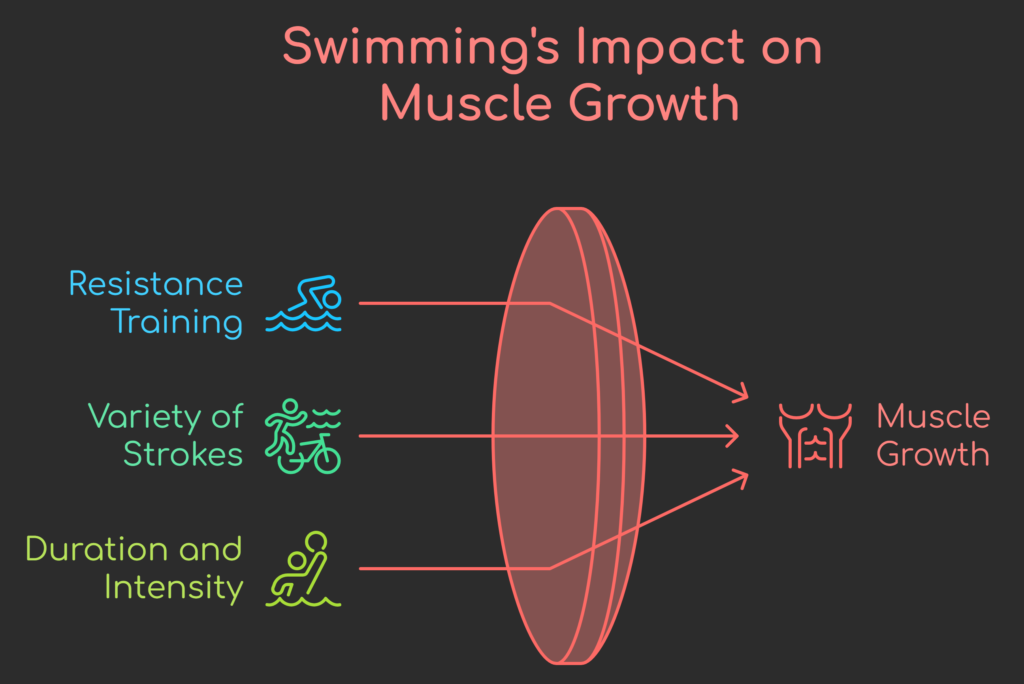
🌟 How Swimming Affects Muscle Growth
- Resistance Training: Water provides resistance, which helps in muscle toning and strength.
- Variety of Strokes: Freestyle, backstroke, breaststroke, and butterfly each target different muscles.
- Duration and Intensity: Longer sessions and higher intensity improve muscle endurance.
🕑 Best Swimming Practices for Muscle Building
- Mix Strokes: Use a combination of strokes to engage different muscle groups.
- Increase Duration: Aim for at least 30 minutes per session for effective muscle engagement.
- Interval Training: Incorporate intervals to boost intensity and muscle activation.
💪 Comparing Swimming Strokes for Muscle Building
| Stroke | Muscle Groups Targeted | Intensity | Difficulty |
|---|---|---|---|
| Freestyle | Chest, Shoulders, Back, Core, Legs | Medium | Easy |
| Backstroke | Back, Shoulders, Core | Medium | Medium |
| Breaststroke | Chest, Shoulders, Triceps, Inner Thighs | Medium-High | Medium |
| Butterfly | Chest, Shoulders, Back, Core, Legs | High | Hard |
🍴 Complementary Exercises for Enhanced Results
- Resistance Training: Incorporate weightlifting for targeted muscle growth.
- Core Exercises: Add planks and crunches to strengthen the core.
- Stretching: Enhance flexibility with regular stretching routines.
🧼 Safety and Effectiveness Tips
- Warm Up: Start with light exercises to prepare muscles.
- Cool Down: Stretch post-swimming to prevent stiffness.
- Stay Hydrated: Drink water before and after your swim.
Dive into Q&A
🍴 Q1: How does swimming compare to weightlifting for muscle growth? 💪 A1: Swimming provides resistance training and builds endurance, but weightlifting is more effective for muscle hypertrophy.
🍴 Q2: Can swimming alone build significant muscle mass? 💪 A2: Swimming is excellent for toning and endurance, but combining it with strength training is more effective for muscle mass.
🍴 Q3: How often should I swim to see muscle-building results? 💪 A3: Aim for 3-4 times a week, mixing different strokes and intensities.
🍴 Q4: Are there specific swimming techniques that maximize muscle growth? 💪 A4: Butterfly and breaststroke are particularly effective due to their high resistance and full-body engagement.
🍴 Q5: What role does nutrition play in building muscle through swimming? 💪 A5: Proper nutrition supports muscle repair and growth. Focus on protein-rich foods and balanced meals.
🍴 Q6: Can swimming help with overall body fat reduction? 💪 A6: Yes, swimming is an effective cardiovascular exercise that helps burn calories and reduce body fat.
🍴 Q7: How can I prevent muscle soreness from swimming? 💪 A7: Gradually increase intensity, stretch regularly, and maintain proper hydration.
🍴 Q8: Is it necessary to do additional exercises if swimming is my primary workout? 💪 A8: Yes, incorporating resistance training can enhance muscle building and overall strength.
🍴 Q9: Can swimming be beneficial for older adults looking to maintain muscle? 💪 A9: Absolutely. Swimming is low-impact and supports muscle maintenance and joint health.
🍴 Q10: What’s the best way to track progress in muscle building through swimming? 💪 A10: Monitor strength gains, endurance levels, and changes in body composition over time.
Must-Have Home Gym Equipment for Every Workout
So, you’re on a mission to transform your living room into the Louvre of sweat? Let’s dive into the must-have home gym equipment that’ll have you grunting like a lumberjack and feeling like a Greek god all from the comfort of your own four walls! You don’t need a crystal ball to know that a good pair of dumbbells is essential—they’re like the bread and butter of home workouts, but with a whole lot more bicep curls. And if you think a yoga mat is just for pretzel-making competition, think again! It’s your magic carpet to stretching your way into insanity while avoiding the wrath of a bruised tailbone. So unless you want to get caught doing air squats in your kitchen with nothing but a bag of flour for company, let’s get this equipment list rolling!
🏋️♀️ Essential Home Gym Gear
- Dumbbells: Versatile for strength training and cardio.
- Resistance Bands: Great for adding resistance to any exercise.
- Yoga Mat: Essential for stretching, yoga, and floor exercises.
🌟 Choosing Your Equipment
- Types of Dumbbells: Adjustable, fixed, or kettlebells – each with unique benefits!
- Resistance Bands Features:
- Variety of Resistances: Light, medium, heavy bands for different exercises.
- Portability: Easy to store and take anywhere.
- Durability: Look for high-quality materials to prevent snapping.
- Yoga Mat Options:
- Thickness: Choose based on comfort and support needs.
- Material: Opt for eco-friendly or non-slip surfaces.
- Portability: Consider mat size and ease of storage.
🕑 Optimal Use of Equipment
- Warm-Up: Use resistance bands for dynamic stretches.
- Strength Training: Incorporate dumbbells for weight lifting exercises.
- Flexibility: Use your yoga mat for stretching and yoga routines.
💪 Comparing Home Gym Equipment
| Equipment | Benefits | Drawbacks | Price Range | Rating |
|---|---|---|---|---|
| Dumbbells | Versatile, effective for strength training | Requires space, can be expensive | $20-$200 | 4.8/5 |
| Resistance Bands | Portable, great for adding resistance | Can snap over time, limited weight | $10-$30 | 4.7/5 |
| Yoga Mat | Comfortable, prevents slipping | Can wear out, might be bulky | $15-$50 | 4.6/5 |
| Adjustable Bench | Supports various exercises, space-saving | Requires assembly, can be costly | $100-$300 | 4.5/5 |
🍴 Equipment Integration Tips
- Combine Workouts: Use dumbbells and resistance bands together for full-body routines.
- Create Circuits: Incorporate yoga mat exercises for flexibility and cool-downs.
- Design a Routine: Mix strength, resistance, and flexibility exercises for a balanced workout.
🧼 Maintenance and Care
- Clean regularly to prevent wear and tear.
- Store equipment properly to extend lifespan.
- Check for damage before each use.
Dive into Q&A
🍴 Q1: What’s the best way to start building a home gym? 🏋️♀️ A1: Start with versatile equipment like dumbbells and resistance bands. Add more specialized gear as you progress.
🍴 Q2: How do I choose the right dumbbells for home use? 🏋️♀️ A2: Consider adjustable dumbbells for space-saving or a range of fixed weights for variety.
🍴 Q3: Can resistance bands replace free weights? 🏋️♀️ A3: Yes, they can offer similar benefits but with less weight; great for portability and varied resistance.
🍴 Q4: How often should I replace my yoga mat? 🏋️♀️ A4: Replace when it starts showing signs of wear, such as reduced grip or visible damage.
🍴 Q5: What’s a budget-friendly way to start a home gym? 🏋️♀️ A5: Start with essential items like resistance bands and a yoga mat. Gradually add more equipment as needed.
🍴 Q6: Can I use my home gym equipment outdoors? 🏋️♀️ A6: Yes, but be mindful of weather conditions to avoid damage. Use covers or store equipment inside when not in use.
🍴 Q7: How can I maximize space in a small home gym? 🏋️♀️ A7: Opt for compact, multifunctional equipment like adjustable dumbbells and foldable benches.
🍴 Q8: What should I look for in a high-quality yoga mat? 🏋️♀️ A8: Look for thickness, non-slip texture, and durability. Eco-friendly materials are also a plus.
🍴 Q9: Are there any safety tips for using home gym equipment? 🏋️♀️ A9: Ensure proper form, start with lighter weights, and regularly inspect equipment for wear.
🍴 Q10: How do I clean my resistance bands? 🏋️♀️ A10: Wash with mild soap and water, then air dry to prevent deterioration and maintain elasticity.
Best Deals on Workout Equipment for 2024
Let’s face it: the right gear can turn your home gym into a personal paradise of fitness glory, and we’re here to make sure you snag the best deals without breaking a sweat. Bargain hunters, unite! 2024 is your year, and trust us—no one wants to be the person frowning at overpriced dumbbells, while others flex with glee at steals and deals. From resistance bands that whisper sweet nothings to your muscles to state-of-the-art treadmills that make running feel like a walk in the park, the lineup is hot this year. Keep your eyes peeled and your wallets ready, because when it comes to fitness, why pay full price when you can do it fabulously on a budget? Time to gear up and get moving—your bank account will thank you!
🏋️♀️ Top Workout Equipment Picks for 2024
- Treadmills: Perfect for cardio enthusiasts.
- Dumbbells: Essential for strength training.
- Resistance Bands: Versatile and travel-friendly.
- Adjustable Benches: Ideal for various exercises.
🌟 Finding the Best Deals
- Compare Prices: Check multiple retailers for competitive pricing.
- Look for Sales: Watch for seasonal promotions and clearance events.
- Consider Bundles: Save by buying equipment sets instead of individual items.
🕑 When to Buy Workout Equipment
- New Year Sales: Great deals as fitness resolutions kick off.
- Black Friday/Cyber Monday: Significant discounts on popular items.
- End-of-Season: Clearances on last year’s models to make room for new stock.
💪 Top Brands and Models for 2024
| Brand | Equipment | Features | Price Range | Rating |
|---|---|---|---|---|
| Nautilus | Treadmills | Heart rate monitoring, multiple incline levels | $700-$1,500 | 4.7/5 |
| Bowflex | Dumbbells | Adjustable weights, space-saving design | $200-$400 | 4.8/5 |
| TheraBand | Resistance Bands | Various resistance levels, durable material | $30-$60 | 4.6/5 |
| Body-Solid | Adjustable Benches | Multiple incline settings, sturdy construction | $150-$300 | 4.7/5 |
🍴 Workout Equipment Buying Tips
- Check Reviews: Read customer feedback for insights on durability and performance.
- Test Before You Buy: If possible, try out equipment for comfort and functionality.
- Warranty: Ensure it comes with a solid warranty for peace of mind.
🧼 Maintenance and Care
- Regularly clean and inspect equipment for wear and tear.
- Follow manufacturer’s maintenance guidelines for longevity.
- Store equipment in a dry, safe place to prevent damage.
Dive into Q&A
🍴 Q1: What’s the best time to buy workout equipment for the best deals? 💪 A1: Look for major sales during New Year, Black Friday, and end-of-season clearances for the best discounts.
🍴 Q2: How can I determine if a piece of workout equipment is worth the investment? 💪 A2: Check customer reviews, compare features and prices, and ensure it fits your fitness goals and space requirements.
🍴 Q3: Are there any specific brands known for providing the best value for workout equipment? 💪 A3: Brands like Nautilus, Bowflex, TheraBand, and Body-Solid are known for their quality and value.
🍴 Q4: What should I look for in a treadmill for home use? 💪 A4: Look for features like heart rate monitoring, adjustable inclines, and a durable motor. Consider size and space compatibility as well.
🍴 Q5: Can I find good deals on high-quality dumbbells? 💪 A5: Yes, especially if you compare prices and look for bundles or seasonal sales. Brands like Bowflex offer excellent options.
🍴 Q6: How do resistance bands compare to free weights? 💪 A6: Resistance bands are versatile, portable, and great for a variety of exercises, while free weights provide more traditional strength training.
🍴 Q7: What’s the benefit of an adjustable bench over a fixed one? 💪 A7: Adjustable benches offer multiple incline settings, making them suitable for a wider range of exercises and allowing for greater versatility.
🍴 Q8: Are there any online retailers known for good deals on workout equipment? 💪 A8: Retailers like Amazon, Walmart, and specialized fitness stores often have competitive pricing and frequent sales.
🍴 Q9: How important is it to check the warranty when buying workout equipment? 💪 A9: It’s crucial as it provides protection against defects and issues. A solid warranty ensures you can get repairs or replacements if needed.
🍴 Q10: What are some essential workout equipment pieces for a home gym? 💪 A10: Essential items include a treadmill or stationary bike, dumbbells, resistance bands, and an adjustable bench to cover various types of workouts.