
Author Archive
Fuel Your Passion with Custom Diet and Exercise Plans
Alright, folks, let’s get real for a moment! You ever try to stick to a diet that feels like chewing on cardboard while running a marathon? Yeah, me too! It’s like some gym guru’s twisted way of saying, “Welcome to the world of boring!” But here’s the deal: you shouldn’t have to sacrifice pleasure for progress! With a custom diet and exercise plan, we can turn that treadmill of despair into a joyride down Flavor Town! Imagine devouring meals that actually tickle your taste buds while sculpting that physique everyone will envy faster than a squirrel in a nut factory! Let’s craft a plan that fuels your passion and keeps your spirit lit like a bonfire on a chilly night! Buckle up, buttercup—because it’s time to make fitness fun again!
🥗 Custom Diet Plans
- Personalized Meal Plans: Tailored to your preferences and nutritional needs.
- Nutritional Assessments: Evaluate current diet and adjust for optimal results.
- Dietary Goals: Set specific targets like weight loss or muscle gain.
- Macronutrient Tracking: Monitor proteins, fats, and carbs for balanced nutrition.
- Recipe Suggestions: Delicious and nutritious recipes to meet dietary goals.
- Food Allergies and Intolerances: Custom plans to avoid allergens and intolerances.
- Supplements Integration: Incorporate supplements effectively into your diet.
🏋️♂️ Custom Exercise Plans
- Personalized Workout Routines: Custom routines based on fitness level and goals.
- Fitness Assessments: Evaluate current fitness to tailor exercise plans.
- Strength Training: Build muscle with targeted strength workouts.
- Cardiovascular Training: Improve endurance with tailored cardio exercises.
- Flexibility and Mobility: Enhance range of motion and prevent injuries.
- Progress Tracking: Monitor improvements and adjust plans as needed.
- Goal Setting: Define and achieve fitness milestones.
- Recovery Strategies: Effective techniques to speed up recovery and prevent burnout.
🌟 Benefits of Custom Plans
- Enhanced Performance: Reach your fitness and health goals more efficiently.
- Improved Health Outcomes: Better overall health with tailored nutrition and exercise.
- Increased Motivation: Stay motivated with personalized and achievable goals.
- Adaptability to Changing Goals: Adjust plans as your needs and goals evolve.
- Balanced Lifestyle: Integrate diet and exercise into a well-rounded lifestyle.
🛠️ Tools and Resources
| Resource | Description | Benefits | Price | Rating |
|---|---|---|---|---|
| Fitness Apps | Apps for tracking workouts and progress | Convenience and real-time tracking | Varies | 4.7/5 |
| Nutrition Tracking Apps | Apps for monitoring diet and nutrition | Detailed food logs and nutritional analysis | Varies | 4.6/5 |
| Exercise Equipment | Tools like dumbbells, resistance bands, etc. | Enhanced workout versatility | $50-$300 | 4.8/5 |
| Online Coaching | Virtual sessions with personal trainers | Personalized guidance and support | $100-$300/month | 4.7/5 |
| Educational Content | Articles, videos, and courses on fitness and nutrition | Knowledge and learning opportunities | Free-$50 | 4.5/5 |
| Support Communities | Forums and groups for motivation and advice | Encouragement and shared experiences | Free | 4.6/5 |
| Expert Guidance | Advice from professionals like nutritionists and trainers | Expert knowledge and personalized plans | Varies | 4.8/5 |
👩⚕️ Expert Guidance
- Nutritionists: Personalized dietary advice and meal planning.
- Personal Trainers: Customized exercise routines and fitness coaching.
- Health Coaches: Holistic approach to health and lifestyle changes.
- Dietitians: Expert advice on nutrition and dietary needs.
- Fitness Consultants: Guidance on achieving fitness goals and improving performance.
Dive into Q&A
🥗 Q1: What’s the primary benefit of custom diet plans? 🏋️♂️ A1: They are tailored to your specific needs, maximizing results and addressing individual goals.
🥗 Q2: How can I ensure my meal plan is balanced? 🏋️♂️ A2: Include a variety of foods to cover all macronutrients and micronutrients, and adjust based on progress.
🥗 Q3: Can I integrate supplements into my custom diet plan? 🏋️♂️ A3: Yes, supplements can be added based on dietary needs and goals for enhanced results.
🥗 Q4: What’s the advantage of personalized workout routines? 🏋️♂️ A4: They are designed to fit your fitness level and goals, improving effectiveness and reducing injury risk.
🥗 Q5: How do I track progress effectively? 🏋️♂️ A5: Use apps and regular assessments to monitor improvements and make necessary adjustments.
🥗 Q6: Can custom plans help with motivation? 🏋️♂️ A6: Yes, personalized goals and progress tracking can significantly boost motivation.
🥗 Q7: How often should I adjust my diet and exercise plans? 🏋️♂️ A7: Regularly review and adjust based on progress, goals, and any changes in your lifestyle.
🥗 Q8: Are there specific tools I should use for tracking? 🏋️♂️ A8: Fitness and nutrition tracking apps, along with exercise equipment, are essential for accurate tracking.
🥗 Q9: What’s the role of expert guidance in custom plans? 🏋️♂️ A9: Experts provide personalized advice and adjustments to ensure optimal results and address individual needs.
🥗 Q10: How do I balance diet and exercise for the best results? 🏋️♂️ A10: Create a well-rounded plan that includes both personalized diet and exercise components, regularly reviewed and adjusted as needed.
Your Guide to Epic Shoulder Cable Exercises
So, you want those shoulders to look like they can carry the weight of the world but don’t want to be mistaken for a bouncer at a nightclub? You’ve come to the right place! The shoulder is a marvel of anatomy—just like that one cousin who insists on showing up at every family gathering uninvited. But fear not, my friend! With the right cable exercises, you can sculpt those deltoids into something that’ll make even Zeus nod in approval. Let’s tackle those shoulder workouts with the precision of a surgeon and the charm of a stand-up comic—because who said fitness can’t be fun? Let’s get to it!
🏋️♂️ Shoulder Cable Exercises
- Cable Front Raise: Targets the anterior deltoids.
- Cable Lateral Raise: Focuses on the lateral deltoids for broader shoulders.
- Cable Rear Delt Fly: Strengthens the posterior deltoids and upper back.
- Cable Upright Row: Engages the traps and deltoids for overall shoulder development.
- Cable Shoulder Press: Works the deltoids and triceps for compound strength.
🌟 Benefits
- Muscle Growth: Promotes hypertrophy and muscle development.
- Strength Improvement: Enhances overall shoulder and upper body strength.
- Joint Stability: Improves stability and reduces injury risk.
- Posture Correction: Helps in maintaining proper shoulder alignment.
🛠️ Techniques
- Proper Form: Maintain correct posture and alignment to maximize effectiveness and avoid injury.
- Range of Motion: Ensure full range of motion for each exercise to target muscles effectively.
- Common Mistakes: Avoid using excessive weights that compromise form and lead to injury.
🔧 Equipment
| Equipment | Description | Usage |
|---|---|---|
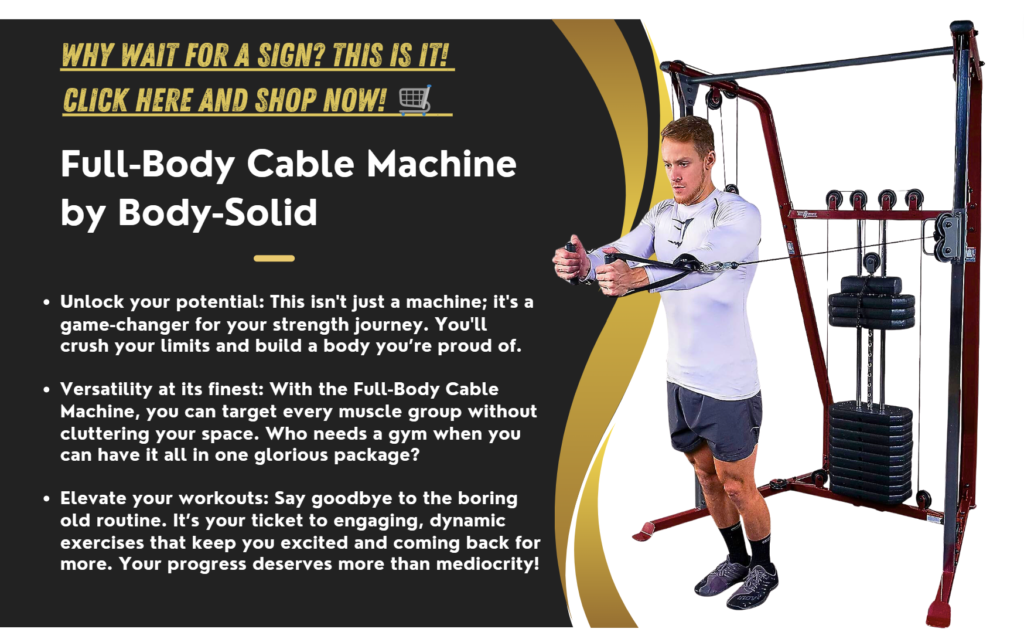
| Cable Machine | Adjustable machine for various angles and resistance levels. | Used for all cable exercises. |
| Handles | Attached to the cable machine for gripping. | For exercises like lateral raises and front raises. |
| Weight Plates | Discs used to adjust resistance on the machine. | Increase or decrease resistance as needed. |
📅 Training Programs
- Strength Training: Focus on heavy weights and low reps for building strength.
- Hypertrophy Training: Moderate weights and higher reps to maximize muscle growth.
- Rehab and Recovery: Light weights and controlled movements to aid in recovery and prevent injuries.
🧼 Safety Tips
- Warm-Up: Always perform a dynamic warm-up to prepare your shoulders and reduce the risk of injury.
- Avoiding Injury: Use appropriate weights and focus on proper form to prevent strains and sprains.
- Proper Weight Selection: Start with lighter weights to master form before progressing to heavier weights.
Dive into Q&A
🏋️♂️ Q1: What’s the main benefit of cable shoulder exercises? 💪 A1: They enhance muscle isolation and provide constant tension throughout the movement.
🏋️♂️ Q2: How can I improve my form during shoulder cable exercises? 💪 A2: Focus on controlled movements and proper alignment to ensure maximum effectiveness.
🏋️♂️ Q3: Can I use these exercises for shoulder rehab? 💪 A3: Yes, with lighter weights and proper guidance, these exercises can aid in shoulder recovery.
🏋️♂️ Q4: How should I adjust weights for different shoulder exercises? 💪 A4: Use lighter weights for isolation exercises like lateral raises and heavier weights for compound movements like the shoulder press.
🏋️♂️ Q5: What’s a unique way to incorporate shoulder cable exercises into a workout routine? 💪 A5: Add them to a push day or a full upper body workout for balanced shoulder development.
🏋️♂️ Q6: How do I prevent common mistakes during these exercises? 💪 A6: Focus on using proper weights and maintain good form to avoid injury and maximize results.
🏋️♂️ Q7: Can I combine cable shoulder exercises with free weights? 💪 A7: Yes, combining them can provide a well-rounded shoulder workout.
🏋️♂️ Q8: How often should I perform shoulder cable exercises? 💪 A8: 2-3 times per week, allowing for adequate rest between sessions.
🏋️♂️ Q9: Are there any specific warm-up exercises recommended? 💪 A9: Dynamic stretches like arm circles and band pull-aparts are effective warm-ups.
🏋️♂️ Q10: What’s the best way to track progress with shoulder cable exercises? 💪 A10: Monitor your weights, reps, and overall shoulder development over time.
The Bench Rules: What Makes the Best Exercise Bench
Let’s face it—choosing the right exercise bench can feel like finding a needle in a haystack. But fear not! We’re about to embark on a journey that’ll break down the critical criteria for picking your perfect workout partner. You wouldn’t just pick any guy off the street to help lift your spirits—or your weights, for that matter. So, let’s dive into the golden rules of bench selection that’ll ensure your workouts kick ass and leave you feeling like a champion instead of a soggy biscuit! Trust me, your muscles will thank you later, and so will your future self when they see how rock-hard those gains are!
🏋️♂️ Bench Types
- Flat Bench: Basic, versatile for various exercises.
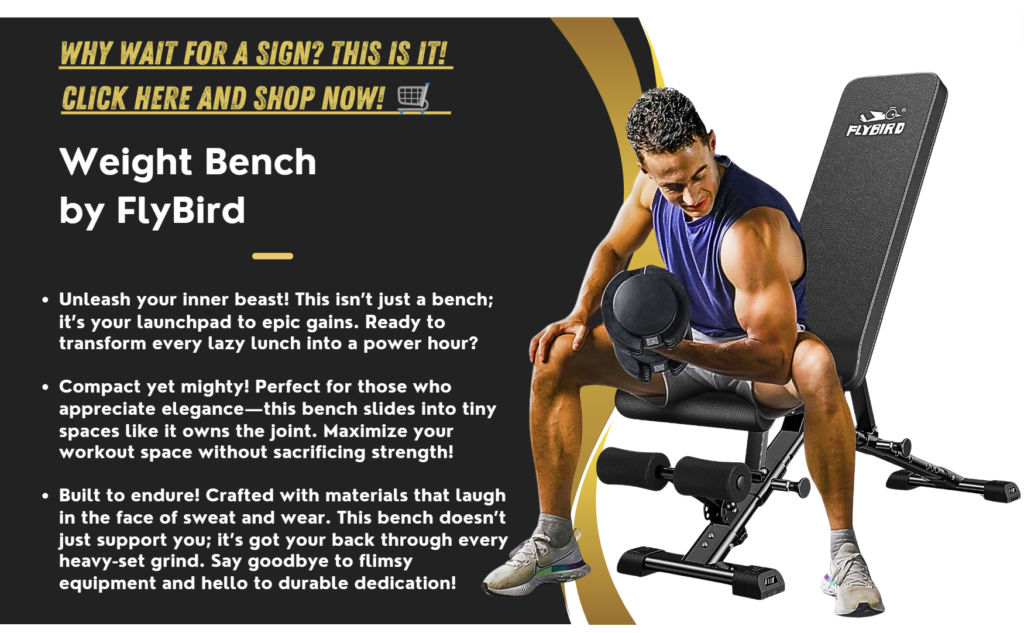
- Adjustable Bench: Customizable angles for flat, incline, and decline positions.
- Incline Bench: Elevates the back for upper chest exercises.
- Decline Bench: Slants downwards for targeting lower chest and abs.
- Olympic Bench: Includes a built-in rack for barbell exercises.
- FID Bench (Flat, Incline, Decline): Offers full adjustability for all angles.
🌟 Key Features
- Padding and Upholstery:
- Comfort: Thick, high-density foam for support.
- Durability: Quality materials to resist wear and tear.
- Adjustability:
- Angle Settings: Multiple positions for versatility.
- Ease of Adjustment: Smooth and secure adjustment mechanisms.
- Weight Capacity:
- Support: Should handle the weight of your workouts plus any additional weight.
- Stability: Ensures safety during use.
- Frame Material:
- Steel: Offers strength and durability.
- Aluminum: Lightweight yet sturdy.
- Stability and Base Design:
- Base Width: Wider bases for better stability.
- Non-Slip Feet: Prevents movement during exercises.
- Size and Dimensions:
- Length and Width: Should accommodate different body sizes.
- Height: Adjustability for various exercises and users.
💪 Brands
| Brand | Bench Types | Price Range | Rating |
|---|---|---|---|
| Bowflex | Adjustable, FID | $200 – $400 | 4.7/5 |
| PowerBlock | Adjustable, Olympic | $250 – $500 | 4.6/5 |
| Rep Fitness | Flat, Adjustable, FID | $150 – $350 | 4.8/5 |
| Body-Solid | Flat, Adjustable, Olympic | $180 – $400 | 4.5/5 |
| Ironmaster | Adjustable, FID | $300 – $600 | 4.9/5 |
🍴 Uses and Benefits
- Strength Training: Essential for bench presses, dumbbell exercises, and more.
- Bodybuilding: Helps target and develop specific muscle groups.
- Powerlifting: Key for heavy lifting and technique practice.
- Rehabilitation and Physical Therapy: Provides support for controlled, therapeutic exercises.
🧼 Maintenance and Care
- Cleaning: Wipe down with a mild cleaner and avoid excess moisture.
- Storage: Keep in a dry area to prevent rust and wear.
- Parts Replacement: Replace damaged parts promptly for safety and functionality.
💸 Price Range
- Budget: $100 – $200 – Basic models with essential features.
- Mid-Range: $200 – $400 – Adjustable benches with good durability.
- High-End: $400 – $600+ – Premium models with advanced features and heavy-duty construction.
Dive into Q&A
🏋️♂️ Q1: What’s the biggest advantage of an adjustable bench? 💪 A1: It offers versatility with multiple incline and decline positions, enhancing exercise options.
🏋️♂️ Q2: How do I choose the right bench for strength training? 💪 A2: Opt for a sturdy, high-capacity bench with adjustable settings for various exercises.
🏋️♂️ Q3: Can I use a flat bench for all types of exercises? 💪 A3: Yes, but an adjustable bench provides more exercise variety with incline and decline options.
🏋️♂️ Q4: What’s the best material for an exercise bench frame? 💪 A4: Steel is preferred for its strength and durability, though aluminum is a lighter option.
🏋️♂️ Q5: How often should I clean my exercise bench? 💪 A5: Regularly, at least once a week, to maintain hygiene and prevent wear.
🏋️♂️ Q6: Is it necessary to have a high weight capacity bench? 💪 A6: For safety and durability, choose a bench with a higher weight capacity than your maximum lifting load.
🏋️♂️ Q7: How do I prevent my bench from wobbling during use? 💪 A7: Ensure the base is wide and stable, and check for secure bolts and non-slip feet.
🏋️♂️ Q8: Are there benches specifically for rehabilitation? 💪 A8: Yes, look for benches with extra padding and adjustable features for controlled exercises.
🏋️♂️ Q9: What’s the best way to store an exercise bench? 💪 A9: Store in a dry, clean area to prevent rust and wear, ideally with some cover.
🏋️♂️ Q10: How do I know if a bench is good quality? 💪 A10: Check reviews, material quality, weight capacity, and brand reputation for reliability.
Traps on Fire: Ignite Your Workout with Lower Trapezius Exercises
Let’s face it: when your lower traps are weaker than a soggy biscuit, your posture looks like a sad teeter-totter set to break any minute. You ever see someone slouching at a desk like they’re trying to fold themselves into a human pretzel? That’s not just bad for their back; it’s a crystal-clear signal that those lower trapezius muscles are taking a long vacation in Cabo without inviting anyone. Here’s the thing—your traps should be firing on all cylinders, baby! With the right moves to target those lower traps, you’ll be flexing like a superhero in no time. Get ready to sculpt those muscles, because we’re about to turn you from “weakling Wednesday” to “trapezius titan” faster than you can say, “pass the pizza!”
🏋️♂️ Lower Trapezius Exercises
- Scapular Retraction:
- Seated Row: Pull the handle towards your torso while keeping elbows close.
- Bent Over Row: Bend at the waist, pull the barbell towards your chest.
- Scapular Depression:
- Face Pulls: Use a rope attachment to pull towards your face, squeezing shoulder blades.
- Straight Arm Pulldown: Pull the bar down from overhead with straight arms.
- Prone Exercises:
- Prone Y Raise: Lift arms to form a ‘Y’ shape while lying face down.
- Prone T Raise: Lift arms to form a ‘T’ shape while lying face down.
- Isolation Exercises:
- Dumbbell Shrugs: Elevate shoulders towards ears with dumbbells in hand.
- Resistance Band Pull Aparts: Stretch band by pulling arms out to sides.
🌟 Trapezius Anatomy
| Trapezius Section | Description | Function |
|---|---|---|
| Upper Trapezius | Located at the top of the back, near the neck. | Elevates and rotates the shoulder blades. |
| Middle Trapezius | Between the upper and lower trapezius. | Retracts the shoulder blades towards the spine. |
| Lower Trapezius | Located below the middle trapezius. | Depresses and rotates the shoulder blades. |
🕑 Workout Techniques
- Form and Technique: Maintain proper posture to maximize effectiveness and reduce injury risk.
- Reps and Sets: Aim for 3-4 sets of 10-15 reps for each exercise.
- Progressive Overload: Gradually increase weight or resistance to continuously challenge muscles.
💪 Equipment
- Dumbbells: Versatile for shrugs and various isolation exercises.
- Resistance Bands: Great for pull aparts and adds variable resistance.
- Cable Machines: Ideal for face pulls and pulldowns with adjustable resistance.
🔗 Related Muscle Groups
- Rhomboids: Located between the shoulder blades, assist with scapular retraction.
- Latissimus Dorsi: Broad back muscle involved in shoulder movement and stabilization.
- Deltoids: Shoulder muscles that work with the trapezius for upper body movements.
Dive into Q&A
🏋️♂️ Q1: What’s the main function of the lower trapezius? 💪 A1: It helps with scapular depression and rotation, improving posture and shoulder stability.
🏋️♂️ Q2: How can I enhance my scapular retraction exercises? 💪 A2: Focus on squeezing your shoulder blades together during rows and ensure full range of motion.
🏋️♂️ Q3: Are prone exercises effective for the lower trapezius? 💪 A3: Yes, prone Y and T raises target the lower trapezius effectively by working the muscles in a prone position.
🏋️♂️ Q4: Can I build lower trapezius strength with resistance bands? 💪 A4: Definitely! Resistance bands are effective for exercises like pull aparts and provide variable resistance.
🏋️♂️ Q5: What’s the best way to prevent injuries while training the trapezius? 💪 A5: Use proper form, avoid overloading, and warm up thoroughly before exercises.
🏋️♂️ Q6: How often should I train my lower trapezius? 💪 A6: Train 1-2 times per week, allowing recovery time between sessions.
🏋️♂️ Q7: How do I combine trapezius exercises with other muscle groups? 💪 A7: Incorporate them into a balanced workout routine that includes exercises for related muscle groups like rhomboids and deltoids.
🏋️♂️ Q8: Can I see results with lower trapezius exercises alone? 💪 A8: While effective, results are best achieved with a comprehensive workout plan targeting all major muscle groups.
🏋️♂️ Q9: Are there any common mistakes to avoid with trapezius exercises? 💪 A9: Avoid using excessive weight that compromises form and ensure full range of motion.
🏋️♂️ Q10: What’s the best way to integrate progressive overload into trapezius training? 💪 A10: Gradually increase weight, resistance, or volume to continuously challenge the muscles and stimulate growth.
Revolutionize Your Fitness with a Foot Exercise Machine Today!
Strap in, folks! The world of fitness is shifting gears, and it’s time to put your best foot forward—literally. Enter the Foot Exercise Machine: the unsung hero of your workout arsenal. Who said exercise had to be all about sweating bullets and gasping for air? No, thank you! This nifty contraption is your secret weapon for staying fit while binging your favorite shows or catching up on those podcasts you’ve been neglecting. Think efficiency! Feel the burn, but don’t risk a wardrobe malfunction while attempting those squats. With this beauty, you can strengthen your calves, improve circulation, and turn your downtime into prime time. So, are you ready to kick up your fitness game? Because this little powerhouse is about to change your footwork forever!
🏋️♂️ Benefits of Foot Exercise Machines
- Improved Cardiovascular Health: Enhances heart and lung function.
- Enhanced Lower Body Strength: Targets legs and glutes for stronger muscles.
- Increased Calorie Burn: Effective for weight management.
- Better Balance and Coordination: Improves stability and overall coordination.
- Convenience and Portability: Easy to use at home or office.
🌟 Types of Foot Exercise Machines
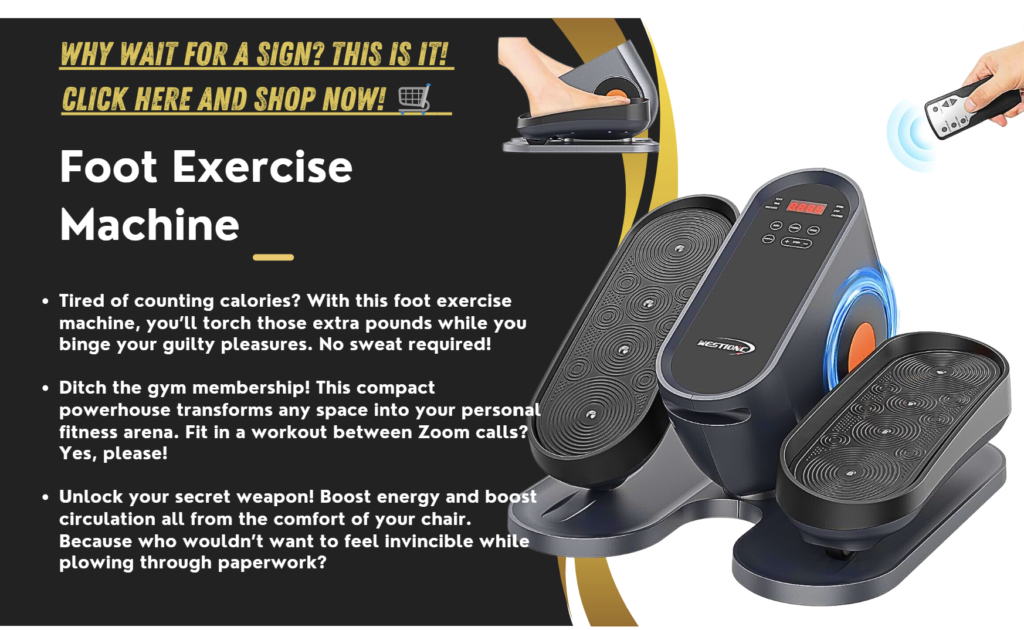
- Mini Elliptical: Compact and ideal for low-impact cardio.
- Under-Desk Cycle: Perfect for multitasking while working.
- Standing Foot Massager: Combines exercise with soothing massage.
- Seated Foot Exercise Machine: Great for seated workouts and rehabilitation.
🕑 Features to Consider
- Adjustable Resistance Levels: Customize intensity for various fitness levels.
- Digital Display: Tracks time, distance, and calories burned.
- Ergonomic Design: Ensures comfort during use.
- Compact Size: Fits easily in small spaces.
- Quiet Operation: Allows for discreet use without noise.
💪 Usage Scenarios
- Home Workouts: Integrate into daily exercise routines.
- Office Fitness: Use under the desk to stay active at work.
- Rehabilitation: Assist with recovery and physical therapy.
- Warm-Up and Cool-Down: Ideal for preparing or relaxing muscles before and after workouts.
🏆 Comparing Foot Exercise Machine Brands
| Brand | Type | Features | Price | Rating |
|---|---|---|---|---|
| DeskCycle | Under-Desk Cycle | Adjustable Resistance, Digital Display | $150 | 4.8/5 |
| Cubii | Mini Elliptical | Compact Size, Quiet Operation | $200 | 4.7/5 |
| Sunny Health & Fitness | Standing Foot Massager | Ergonomic Design, Adjustable Intensity | $120 | 4.6/5 |
| FlexiSpot | Seated Foot Exercise Machine | Digital Display, Compact Size | $130 | 4.5/5 |
🍴 Buying Guide
- Price Range: Typically $100 – $250 depending on features.
- Warranty: Check for at least 1-year warranty for reliability.
- Customer Reviews: Read feedback for real-world insights and performance.
- Product Comparisons: Compare features and prices to find the best fit.
- Recommended Accessories: Consider additional items like floor mats or adjustable desks.
🧼 Storage and Safety Tips
- Store in a dry, cool place.
- Clean regularly to maintain functionality.
- Follow manufacturer guidelines for safe use and maintenance.
Dive into Q&A
💧 Q1: What’s the primary benefit of using a foot exercise machine? 💧 A1: It enhances cardiovascular health and strengthens lower body muscles.
💧 Q2: How can I maximize the benefits of my foot exercise machine? 💧 A2: Use it consistently and adjust resistance levels for varied workouts.
💧 Q3: Can I use a foot exercise machine while working? 💧 A3: Yes, under-desk cycles and mini ellipticals are designed for use while seated.
💧 Q4: Is it suitable for rehabilitation purposes? 💧 A4: Absolutely! Seated and standing machines can aid in recovery and physical therapy.
💧 Q5: What’s a unique way to use a foot exercise machine? 💧 A5: Incorporate it into your warm-up or cool-down routine for added benefits.
💧 Q6: Can a foot exercise machine fit in a small space? 💧 A6: Yes, many models are compact and designed for easy storage.
💧 Q7: How do I maintain my foot exercise machine? 💧 A7: Regularly clean it and follow the manufacturer’s maintenance instructions.
💧 Q8: Are there any side effects of using a foot exercise machine? 💧 A8: Generally safe, but start slow to avoid overuse injuries.
💧 Q9: Can I use a foot exercise machine if I’m not very active? 💧 A9: Yes, it’s a great way to start incorporating more movement into your day.
💧 Q10: What should I look for when choosing a foot exercise machine? 💧 A10: Consider features, price, and user reviews to find the best machine for your needs.
Stay Fresh on the Go: The Essential Rechargeable Bike Fan
Picture this: You’re pedaling away, the wind rushing through your hair, feeling like a hero on two wheels—only to be hit by a sweat wave that makes you question every life choice you’ve ever made. Let’s be real, no one wants to smell like a walking gym sock while trying to enjoy the great outdoors. Enter the rechargeable bike fan, your knight in shining armor for those hot, sticky rides! This game-changer isn’t just about avoiding the odor; it’s about embracing life to the fullest—cooler, fresher, and with a breeze that says, “Hey, I’ve got this!” Get ready to conquer the trails, turning heads and leaving a trail of envy in your wake, all while staying as cool as a cucumber in shades!
🌬️ Benefits of Rechargeable Bike Fans
- Stay Cool: Keeps you refreshed during intense rides.
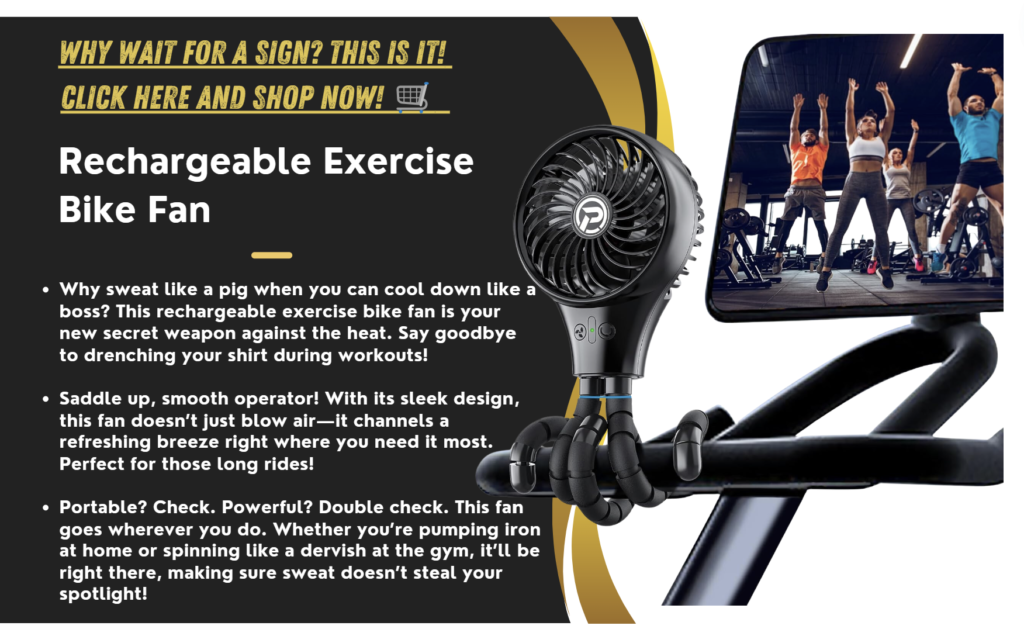
- Hands-Free Operation: Mounts easily on your bike.
- Eco-Friendly: USB rechargeable for sustainability.
🌟 Rechargeable Bike Fans Features
- Battery Life: Up to **8 hours** of continuous use.
- Charge Duration: Typically takes **2-4 hours** to fully charge.
- Charging Time: Quick recharge for minimal downtime.
💨 Fan Speed Settings
- Low Speed: Gentle breeze for relaxed riding.
- Medium Speed: Balanced airflow for moderate cooling.
- High Speed: Strong airflow for intense heat.
🛠️ Design and Build
- Size and Portability: Compact and lightweight for easy transport.
- Mounting Options:
- Handlebar Mount: Secure attachment for easy access.
- Frame Mount: Stable mounting on various bike frames.
- Power Source:
- USB Rechargeable: Convenient and versatile charging.
- Battery Type: Typically Lithium-ion for long-lasting performance.
- Materials:
- Fan Blades: Durable plastic or metal for efficient airflow.
- Housing: Lightweight yet sturdy for lasting use.
🏞️ Usage Scenarios
- Cycling: Keeps you cool on long bike rides.
- Urban Commuting: Enhances comfort during city travels.
- Long-Distance Rides: Essential for extended journeys.
- Outdoor Activities:
- Camping: Portable cooling for outdoor relaxation.
- Hiking: Handy for cooling during strenuous hikes.
💡 Brands and Models
🛠️ Maintenance and Care
- Cleaning: Wipe with a damp cloth; avoid submerging.
- Battery Care: Charge regularly and avoid complete discharge.
🔧 Related Accessories
- Bike Mounts: Secure additional mounts for various setups.
- Charging Cables: Keep extras on hand for convenience.
Dive into Q&A
🌬️ Q1: What’s the main benefit of a rechargeable bike fan? 🌬️ A1: It provides continuous cooling without the need for disposable batteries.
🌬️ Q2: How can I extend the battery life of my bike fan? 🌬️ A2: Use lower speed settings and fully charge the battery before long rides.
🌬️ Q3: Can I use a bike fan in rainy conditions? 🌬️ A3: Most are water-resistant but avoid exposing them to heavy rain.
🌬️ Q4: How do I choose the right mounting option? 🌬️ A4: Consider your bike type and preferred cooling position.
🌬️ Q5: What’s a unique way to use a bike fan? 🌬️ A5: Use it while camping to keep cool at night.
🌬️ Q6: Can I use the bike fan while stationary? 🌬️ 🌬️ A6: Yes, it’s great for cooling during breaks or while resting.
🌬️ Q7: How do I prevent my bike fan from getting damaged? 🌬️ A7: Handle with care, keep it clean, and store it properly.
🌬️ Q8: Are rechargeable bike fans worth the investment? 🌬️ A8: Yes, they offer convenience, cost savings on batteries, and are environmentally friendly.
🌬️ Q9: What’s the best way to clean my bike fan? 🌬️ A9: Use a damp cloth to gently clean the fan blades and housing.
🌬️ Q10: How do I know if my bike fan needs a new battery? 🌬️ A10: If you notice significantly reduced battery life or performance, it may be time for a replacement.
Be Bold: Exercise Apparel That Makes a Statement
Alright, let’s set the scene: You roll into the gym looking like a neon sign that just survived a paintball match. Why? Because you’re wearing exercise gear that screams, “I’m here to sweat, but also to make you question your life choices!” I mean, let’s be real: if your workout clothes aren’t turning heads, are you even breaking a sweat? In a world full of basic black yoga pants, it’s high time we put on something that actually says something—something that proudly proclaims: “I don’t just run; I run with style, flair, and perhaps too much caffeine!” Forget clandestine cardio; it’s time to strut your stuff and let your apparel do the talking! So, buckle up, folks; this isn’t just about fitness; it’s about fashion that flexes!
🏋️♂️ Types of Exercise Apparel
- Activewear: Includes various pieces for different workouts.
- Sportswear: Designed for high-performance sports activities.
- Gym Wear: Ideal for weightlifting and gym workouts.
- Yoga Pants: Stretchy and comfortable for yoga and stretching.
- Running Shorts: Lightweight and breathable for running.
- Compression Gear: Supports muscles and improves circulation.
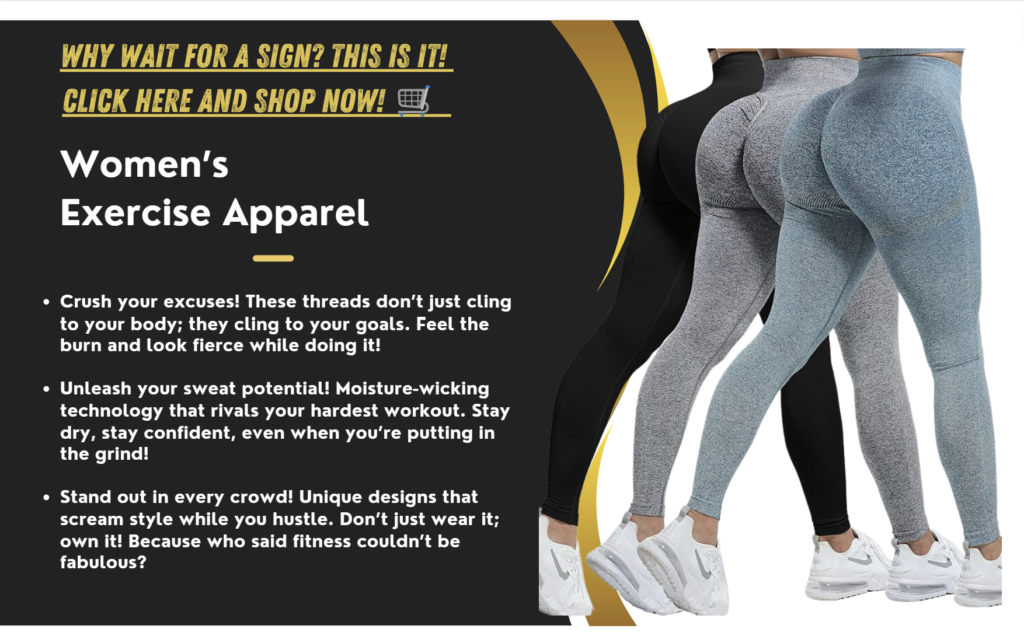
🌟 Key Features
- Style:
- Bold Prints: Eye-catching patterns and designs.
- Bright Colors: Stand out with vivid hues.
- Unique Designs: Trendy cuts and details.
- Functionality:
- Moisture-Wicking: Keeps sweat away from your skin.
- Breathability: Allows airflow to keep you cool.
- Flexibility: Provides a full range of motion.
- Durability: Withstands intense workouts and frequent washing.
💪 Brands
| Brand | Popular Products | Price Range | Rating |
|---|---|---|---|
| Nike | Leggings, Sports Bras, Running Shoes | $30-$100 | 4.7/5 |
| Adidas | Track Pants, T-Shirts, Sneakers | $25-$90 | 4.6/5 |
| Under Armour | Compression Gear, Shorts, Jackets | $35-$95 | 4.7/5 |
| Lululemon | Yoga Pants, Sports Bras, Jackets | $50-$150 | 4.8/5 |
| Gymshark | Leggings, Sports Bras, Gym Wear | $30-$80 | 4.5/5 |
| Athleta | Yoga Pants, Running Shorts, Jackets | $40-$120 | 4.6/5 |
🌟 Trends
- Athleisure: Combining workout wear with casual style.
- Sustainable Materials: Eco-friendly fabrics and production.
- Personalized Gear: Custom designs and fits.
👥 Target Audiences
- Fitness Enthusiasts: Regular gym-goers and workout lovers.
- Casual Wearers: Individuals who blend workout wear with everyday outfits.
- Professional Athletes: High-performance gear for top athletes.
🛠️ Accessories
- Workout Shoes: Essential for comfort and performance.
- Sports Bras: Provides support during exercise.
- Headbands: Keeps hair in place and absorbs sweat.
- Fitness Gloves: Enhances grip and protects hands.
💰 Purchase Considerations
- Price Range: Budget-friendly to premium options.
- Fabric Types: From cotton to advanced synthetic materials.
- Size and Fit: Ensure a comfortable and accurate fit.
Dive into Q&A
🏋️♂️ Q1: What makes exercise apparel stand out? 💪 A1: Bold prints, bright colors, and unique designs.
🏋️♂️ Q2: How do I choose the right exercise apparel for my workout? 💪 A2: Consider functionality like moisture-wicking and breathability.
🏋️♂️ Q3: Can I wear exercise apparel outside the gym? 💪 A3: Yes, athleisure trends make it stylish for casual wear.
🏋️♂️ Q4: Are there any benefits to sustainable exercise apparel? 💪 A4: It’s eco-friendly and often made with high-quality materials.
🏋️♂️ Q5: What’s a trendy accessory to complement my workout gear? 💪 A5: Fitness gloves and headbands are both practical and stylish.
🏋️♂️ Q6: How important is durability in exercise apparel? 💪 A6: Very important. Durable fabrics withstand frequent use and washing.
🏋️♂️ Q7: How do I ensure a good fit for my workout clothes? 💪 A7: Check sizing guides and reviews for accurate fit information.
🏋️♂️ Q8: Can exercise apparel improve workout performance? 💪 A8: Yes, well-designed gear enhances comfort and mobility.
🏋️♂️ Q9: Are there any specific brands known for stylish exercise apparel? 💪 A9: Nike, Lululemon, and Gymshark are known for their trendy designs.
🏋️♂️ Q10: What should I consider when buying exercise apparel online? 💪 A10: Review the price range, fabric types, and return policies.
Flex Your Skills: Functional Trainer Exercises for Dynamic Workouts
Alright, folks! Let’s talk about the magical world of functional training—where weights become your best friends and movement patterns transform into dance-offs with gravity! You ever see someone at the gym who looks like they’re fighting off a swarm of angry bees? Yeah, that’s not an exercise; that’s just their awkward approach to walking on a treadmill. But fear not! With functional training, you’ll not only look like a pro, but you’ll also unleash the superhuman within you.
So, what’s the problem we’re tackling here? It’s simple: most workouts are like that cousin who shows up to the family reunion—lots of noise but little substance. They focus on isolated muscles instead of integrating your body to move like the glorious machine it is! Let’s dive into some dynamic exercises that’ll have you flexing skills you didn’t even know you had, all while having a little fun! Ready? Buckle up, because it’s time to give your muscles a wake-up call!
💪 Functional Trainer Types
- Cable Machines: Versatile for strength training and isolation exercises.
- Resistance Bands: Portable and adaptable for various exercises.
- Free Weights: Essential for building strength and muscle mass.
- Suspension Trainers: Utilizes body weight for functional and core-strengthening exercises.
🌟 Features to Look For
- Adjustable Resistance: Customize the intensity of your workouts.
- Multi-Directional Movement: Allows for varied and dynamic exercises.
- Ergonomic Design: Ensures comfort and proper form during exercises.
🕑 Dynamic Workouts
- Types:
- High-Intensity Interval Training (HIIT): Short bursts of intense exercise followed by rest.
- Circuit Training: Rotating through different exercises with minimal rest.
- Plyometrics: Explosive movements to increase power and strength.
- Agility Training: Exercises that improve speed and coordination.
- Benefits:
- Improved Strength: Enhances overall muscular strength.
- Increased Flexibility: Promotes greater range of motion.
- Enhanced Coordination: Improves balance and motor skills.
- Better Balance: Strengthens core and stabilizing muscles.
💪 Exercises
| Category | Exercise | Target Area |
|---|---|---|
| Upper Body | Shoulder Press | Shoulders |
| Chest Fly | Chest | |
| Lat Pulldown | Back | |
| Bicep Curl | Arms | |
| Lower Body | Squats | Legs |
| Lunges | Legs | |
| Deadlifts | Legs & Back | |
| Leg Press | Legs | |
| Core | Planks | Core |
| Russian Twists | Core | |
| Cable Woodchoppers | Core | |
| Hanging Leg Raises | Core |
🏋️♀️ Training Programs
- Beginner:
- Basic Exercise Routines: Simple, fundamental exercises.
- Introductory Workouts: Low-impact and easy to follow.
- Low-Intensity Exercises: Suitable for new exercisers.
- Intermediate:
- Progressive Workouts: Gradually increasing difficulty.
- Strength and Conditioning: Focus on building strength and endurance.
- Moderate-Intensity Exercises: Challenging but manageable.
- Advanced:
- High-Intensity Programs: Intense and demanding workouts.
- Performance Enhancement: For athletes and advanced trainers.
- Complex Movements and Techniques: Advanced exercises for skilled individuals.
🏋️♂️ Equipment
| Brands | Accessories | |
|---|---|---|
| Life Fitness | Weight Plates | |
| Bowflex | Resistance Bands | |
| Precor | Stability Balls | |
| TRX | Foam Rollers |
Dive into Q&A
💪 Q1: What’s the main advantage of using functional trainers? 💪 A1: They provide versatile and dynamic workouts that target multiple muscle groups.
💪 Q2: How can I maximize my results with functional trainers? 💪 A2: Combine different types of exercises and adjust resistance levels for varied workouts.
💪 Q3: Can functional trainers be used for rehabilitation? 💪 A3: Yes, they are excellent for low-impact rehabilitation exercises and strengthening.
💪 Q4: How do I choose the right functional trainer for my needs? 💪 A4: Consider factors like resistance types, features, and the types of exercises you plan to perform.
💪 Q5: What’s a unique workout to try with a functional trainer? 💪 A5: Try a full-body circuit incorporating cable exercises, resistance bands, and suspension moves.
💪 Q6: How often should I use a functional trainer for best results? 💪 A6: Aim for 3-4 times a week, varying workouts to target different muscle groups.
💪 Q7: How do I prevent injury while using a functional trainer? 💪 A7: Ensure proper form, start with lighter weights, and gradually increase intensity.
💪 Q8: Are functional trainers suitable for home gyms? 💪 A8: Yes, they are versatile and can fit various home gym spaces.
💪 Q9: What are the key accessories to complement a functional trainer? 💪 A9: Weight plates, resistance bands, stability balls, and foam rollers.
💪 Q10: What’s the best way to incorporate functional trainers into a balanced workout routine? 💪 A10: Use them alongside cardio, stretching, and other strength training for a comprehensive routine.
Fire Up Your Workout: Cable Shoulder Exercises That Slay
Listen up, folks! We’re diving headfirst into the world of cable shoulder exercises that’ll have you looking like a Greek god—or at least like a really fit statue that just came off a reality TV show. Why bother with cables, you ask? Well, let me tell you, they’re the secret sauce to sculpting those shoulders and turning heads faster than a toddler in a candy store. No more puny lifts or awkward arm flails, because we’re leveling up our game and making those gainz! With cables, you’ll get the constant tension that free weights can only dream about. As the kids say, “Let’s goooo!”—and bring the thunder, because these moves will slay! Ready to pump it up?
💪 Benefits of Cable Shoulder Exercises
- Improved Shoulder Strength: Builds overall shoulder power.
- Enhanced Muscle Definition: Defines and sculpts shoulder muscles.
- Increased Stability: Improves joint stability and balance.
🌟 Types of Cable Shoulder Exercises
- Cable Front Raise:
- Form Tips: Keep your back straight and lift to shoulder height.
- Common Mistakes: Avoid swinging the weights or using excessive weight.
- Cable Lateral Raise:
- Form Tips: Raise arms to the side, keeping a slight bend in the elbows.
- Common Mistakes: Don’t lift too high or use momentum.
- Cable Rear Delt Fly:
- Form Tips: Bend at the waist, keep arms straight, and squeeze shoulder blades together.
- Common Mistakes: Avoid rounding your back or using heavy weights.
- Cable Shoulder Press:
- Form Tips: Press straight up, keeping elbows slightly in front of the body.
- Common Mistakes: Don’t arch your back or use excessive weight.
🛠️ Equipment Needed
| Equipment | Description |
|---|---|
| Cable Machine | Essential for performing all cable shoulder exercises. Features adjustable pulleys. |
| Adjustable Pulley | Allows for variation in exercise angles and resistance levels. |
| Handles | Provides grip for various exercises, ensuring proper form and safety. |
🧩 Techniques
- Correct Form: Maintain a stable core and controlled movements.
- Breathing Techniques: Exhale during exertion and inhale during relaxation.
- Range of Motion: Perform exercises through a full range of motion for effectiveness.
📈 Workout Programs
- Beginner Routines: 2 sets of 10-12 reps for each exercise, 2-3 times per week.
- Intermediate Routines: 3 sets of 8-10 reps, incorporating supersets or dropsets, 3-4 times per week.
- Advanced Routines: 4-5 sets of 6-8 reps, with advanced techniques like pyramid sets, 4-5 times per week.
🛡️ Safety
- Warm-up Exercises: Start with light cardio and dynamic stretches.
- Injury Prevention: Use proper form and avoid overloading the weights.
- Proper Weight Selection: Choose weights that challenge but do not compromise form.
💡 Tips for Effectiveness
- Progressive Overload: Gradually increase weight or resistance to continue making gains.
- Frequency of Training: Train shoulders 1-2 times per week, allowing for recovery.
- Rest and Recovery: Ensure adequate rest between shoulder workouts for muscle repair.
Dive into Q&A
💪 Q1: What’s the main benefit of cable shoulder exercises? 💪 A1: They enhance shoulder strength, muscle definition, and stability.
💪 Q2: How can I maximize my results with cable shoulder exercises? 💪 A2: Focus on correct form, use progressive overload, and ensure consistent training.
💪 Q3: Can I combine cable shoulder exercises with other workouts? 💪 A3: Yes, integrate them into a balanced upper body or full-body routine.
💪 Q4: Are cable shoulder exercises suitable for beginners? 💪 A4: Yes, start with lighter weights and focus on mastering form.
💪 Q5: What’s a unique tip for performing cable shoulder exercises? 💪 A5: Incorporate variations like different angles to target all shoulder muscles.
💪 Q6: How often should I train shoulders with cable exercises? 💪 A6: 1-2 times per week, allowing for recovery and muscle growth.
💪 Q7: How do I avoid common mistakes during cable shoulder exercises? 💪 A7: Focus on controlled movements, proper weight, and correct form.
💪 Q8: Can cable shoulder exercises be performed at home? 💪 A8: Yes, if you have a cable machine or resistance bands with adjustable settings.
💪 Q9: Are there any specific safety tips for cable shoulder exercises? 💪 A9: Warm up, use proper weights, and maintain good form to prevent injuries.
💪 Q10: What’s the best way to incorporate cable shoulder exercises into a workout program? 💪 A10: Include them in your upper body or shoulder-specific workouts, balancing with other exercises.
Sweat with Style: Cable Chest Exercises for a Killer Workout
Alright, folks, listen up! You know what’s harder than explaining to your grandma why TikTok is a thing? Trying to get your chest gains on point while avoiding that awkward gym equipment intimidation. But fear not! Cable chest exercises are here to save the day—just like a superhero who forgot to take off their spandex before going to brunch. With cables, you get the best of both worlds: control and flexibility. It’s like making a gourmet meal out of instant ramen—who knew you could flex those pecs with such finesse? So, strap in and let’s uncover how to sculpt that chest with moves that’ll make even the most seasoned gym-goer raise an eyebrow in curiosity!
🏋️♂️ Benefits of Cable Chest Exercises
- Muscle Activation: Engages all parts of the chest effectively.
- Joint Stability: Provides controlled movements to enhance stability.
- Versatility: Allows for a variety of angles and exercises.
🌟 Cable Chest Exercises
- Chest Press:
- Flat Bench Cable Press: Targets the middle chest.
- Incline Cable Press: Focuses on the upper chest.
- Decline Cable Press: Hits the lower chest.
- Cable Fly:
- Standing Cable Fly: Enhances chest width.
- Incline Cable Fly: Stresses the upper chest.
- Decline Cable Fly: Emphasizes the lower chest.
- Cable Crossover:
- High Cable Crossover: Targets the upper chest and shoulders.
- Low Cable Crossover: Focuses on the lower chest.
- Cable Pullover:
- Standing Cable Pullover: Works the chest and lats.
- Lying Cable Pullover: Isolates the chest muscles.
- Single Arm Cable Press:
- Single Arm Flat Bench Cable Press: Builds chest strength and stability.
- Single Arm Incline Cable Press: Targets the upper chest with focus.
💪 Technique Tips
- Form and Posture: Maintain proper alignment to avoid injury.
- Breathing: Exhale during exertion and inhale during the release.
- Range of Motion: Perform each movement through its full range.
🧰 Equipment
- Cable Machine: Essential for all cable exercises.
- Handles and Attachments: Use appropriate attachments for varied exercises.
❌ Common Mistakes
- Overextension: Avoid excessive range that could lead to injury.
- Inadequate Weight: Choose a weight that challenges your muscles but allows for proper form.
🏋️♀️ Workout Routines
| Level | Routine | Sets | Reps | Rest |
|---|---|---|---|---|
| Beginner | Flat Bench Cable Press, Standing Cable Fly | 3 | 10-12 | 60 seconds |
| Intermediate | Incline Cable Press, High Cable Crossover, Lying Cable Pullover | 4 | 8-10 | 90 seconds |
| Advanced | Decline Cable Press, Low Cable Crossover, Single Arm Incline Cable Press | 4-5 | 6-8 | 120 seconds |
🔄 Variations
- Unilateral vs. Bilateral: Switch between single-arm and double-arm exercises for balanced development.
- Superset Options: Combine cable exercises with bodyweight movements for a high-intensity workout.
Dive into Q&A
💪 Q1: What’s the biggest benefit of cable chest exercises? 💪 A1: They provide constant tension throughout the movement, maximizing muscle activation.
💪 Q2: How can I improve my form on cable chest exercises? 💪 A2: Focus on maintaining proper posture and controlled movements.
💪 Q3: Can cable chest exercises be effective for building strength? 💪 A3: Yes, when performed with proper weight and technique, they can build both strength and muscle mass.
💪 Q4: How often should I include cable chest exercises in my routine? 💪 A4: Incorporate them 2-3 times a week for balanced chest development.
💪 Q5: What’s a good way to vary my cable chest workout? 💪 A5: Alternate between different angles and types of exercises, like flys and presses.
💪 Q6: Can I use cable chest exercises for a full-body workout? 💪 A6: Yes, pair with other muscle groups for a comprehensive routine.
💪 Q7: How do I avoid common mistakes like overextension? 💪 A7: Use a weight you can control and focus on form over range of motion.
💪 Q8: Are cable chest exercises suitable for beginners? 💪 A8: Yes, with lighter weights and proper guidance, they are ideal for beginners.
💪 Q9: What’s the best way to progress with cable chest exercises? 💪 A9: Gradually increase weight and intensity while maintaining good form.
💪 Q10: How can I integrate cable chest exercises into a balanced routine? 💪 A10: Combine with exercises for other muscle groups and include both compound and isolation movements.